
Bird Nutrition Calculator | Bird Calorie Calculator - Free Tool
Free bird nutrition calculator and bird calorie calculator. Calculate your bird

Last updated: July 17, 2026
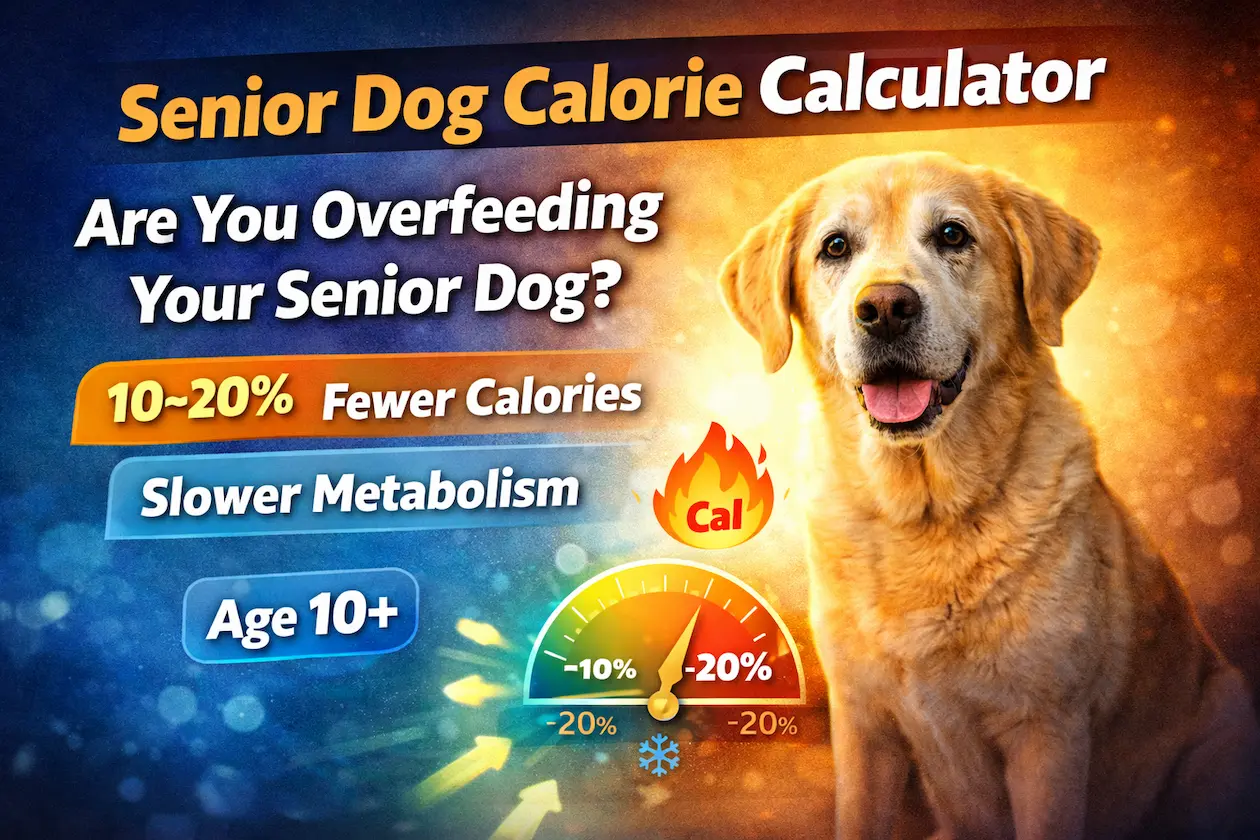
This tool helps estimate the daily calorie requirements for your senior dog (10+ years) based on their weight, activity level, and body condition.
Important: Senior dogs typically need 10-20% fewer calories than adult dogs due to decreased activity levels and slower metabolism. However, individual needs vary based on health conditions and activity level.
Simply fill out the fields and click Calculate to get started.
| Condition | Description | Visual/Physical Cues |
|---|---|---|
| Underweight | A senior dog is considered underweight if it has too little body fat and muscle mass, which can indicate health issues. | - Ribs, spine, and hip bones are prominently visible - Little to no fat can be felt - Waist and abdominal tuck are very pronounced - Loss of muscle mass may be noticeable |
| Normal | A senior dog is considered to be at a normal weight if it has a healthy balance of body fat and muscle mass for its size and breed. | - Ribs can be felt but not seen - Waist is visible behind the ribs when viewed from above - Abdominal tuck is present when viewed from the side - Body appears well-proportioned |
| Overweight | A senior dog is considered overweight if it has too much body fat, which can exacerbate age-related health problems. | - Ribs are difficult to feel under a layer of fat - Waist is not easily visible or absent - Abdominal tuck is minimal or absent - Fat deposits around the lumbar area and base of the tail |
| Activity Level | Description | Examples |
|---|---|---|
| Low | Minimal activity, mostly indoor, limited play | - Short, slow walks - Limited playtime - Primarily indoor lifestyle - May have mobility issues |
| Moderate | Regular but gentle activity, both indoor and some outdoor | - Daily gentle walks - Regular but low-intensity playtime - Mix of indoor and outdoor |
| High | Still very active for a senior dog, regular exercise | - Regular walks or light runs - Frequent active play - Maintains good mobility |
Our senior dog calorie calculator helps you determine exactly how many calories your senior dog needs each day. Senior dogs (typically 10+ years old) have unique nutritional requirements compared to adult dogs, often needing fewer calories due to decreased activity and slower metabolism.
Senior dogs typically need 10-20% fewer calories than adult dogs because they're less active and have slower metabolisms. However, the exact amount depends on:
Typical calorie needs for senior dogs:
Note: These are general guidelines. Use our calculator above for personalized recommendations based on your specific senior dog.
Dogs are generally considered senior at:
However, individual dogs age differently, so consider your dog's activity level, health, and energy when determining if they're a senior.
Our calculator uses a 0.8x multiplier for senior dogs compared to adult dogs. This accounts for:
However, some senior dogs may need more calories if they're underweight or have health conditions that increase energy needs.
The examples below show how daily calorie targets shift for a moderately active senior dog at a healthy body condition. These figures use the resting energy requirement formula (70 x body weight in kg raised to the power of 0.75) and then apply a senior maintenance factor. Your dog's real number will vary with activity and health, so treat these as starting points and confirm with the calculator above.
Notice that calorie needs do not scale in a straight line with weight. A dog twice as heavy does not need twice the calories, because metabolic rate rises more slowly than body mass. This is why large and giant breed seniors often need fewer calories per pound than the small breeds sitting on your lap.
Body condition score (BCS) is the single most useful tool for adjusting your senior dog's calories. Most veterinarians use a 9-point scale, where 4 to 5 is ideal. Because the scale is based on what you can see and feel rather than the number on the scale, it works across every breed and size.
Run your hands along your senior dog's ribs and spine once a week. Because coat length can hide changes, especially in fluffy breeds, feeling for fat cover is far more reliable than looking. Recheck the body condition score every few weeks and adjust the calorie target you get from the calculator up or down accordingly.
Obesity is one of the most common and most preventable problems in older dogs. Excess weight adds strain to arthritic joints, worsens heart and respiratory conditions, increases anesthetic risk, and has been linked to a shorter lifespan. Because senior dogs move less, even a small overestimate in their daily calories can add up to steady weight gain over the year.
If your senior dog needs to lose weight, aim for slow, steady loss of about 1-2% of body weight per week. Rapid weight loss in older dogs can strip muscle and mask underlying disease, so any deliberate weight-loss plan should be checked with your veterinarian first.
The 0.8x senior multiplier is a starting point for a healthy older dog. Many common age-related conditions push calorie needs in one direction or the other, so your veterinarian may recommend a target that differs from the calculator's estimate.
Any sudden change in appetite, thirst, or weight in a senior dog is worth a veterinary visit. It can be the first visible sign of a condition that needs treatment as well as a diet change.
Older dogs often have more sensitive digestion, so switching foods too quickly can cause vomiting, diarrhea, or a hunger strike. A gradual transition over 7 to 10 days lets the gut adjust and gives you time to watch for any reaction.
Slow the pace if you see loose stools or reduced appetite, and hold at the current ratio for a few extra days before moving on. Warming the food slightly or adding a spoonful of plain low-sodium broth can tempt a picky senior. If digestive upset continues beyond the transition, check with your veterinarian before pushing further.
Most senior dogs need 10-20% fewer calories than they did as adults, which typically works out to somewhere between 200 and 1,500 calories per day depending on their size. Weight, activity level, body condition, and health status all shift the number, so use the calculator above for a figure tailored to your dog.
As dogs age they usually move less and lose some muscle mass, which lowers the number of calories they burn. Feeding the same portion you used during their adult years then delivers a surplus. Recheck the calculator with their current activity level and trim the portion, or switch to a lower-calorie senior formula.
Two meals a day suits most senior dogs and keeps energy and digestion steady. Dogs with sensitive stomachs, diabetes, or a small appetite may do better with three smaller meals. Whatever schedule you choose, keep the daily calorie total the same and split it across the meals.
Unexplained weight loss in an older dog should never be assumed to be normal aging. It can point to dental pain, kidney disease, diabetes, or other conditions. See your veterinarian to find the cause before simply increasing food, then adjust calories once you know what you are dealing with.
Per pound of body weight, yes. Larger dogs have a slower metabolic rate relative to their size, so a 100 lb senior does not need four times the calories of a 25 lb senior. Large and giant breeds also reach their senior years earlier, which means their calorie needs often start dropping sooner.
Tip: This calculator is specifically designed for senior dogs (10+ years) and automatically accounts for their lower calorie needs with a 0.9x multiplier compared to adult dogs.
FAQs
Senior dogs typically need 10-20% fewer calories than adult dogs due to decreased activity and slower metabolism. However, the exact amount depends on weight, breed, activity level, and health status. Use our calculator to get an accurate estimate.
Our senior dog calorie calculator determines how many calories your senior dog needs based on weight, breed, activity level, and body condition. Senior dogs typically need 0.8x the calories of adult dogs, but this varies by individual.
Yes, most senior dogs need 10-20% fewer calories than adult dogs because they're less active and have slower metabolisms. However, some senior dogs may need more calories if they're underweight or have health conditions. Use our calculator for personalized recommendations.
Senior dogs benefit from high-quality food with appropriate protein levels (not too high), joint support nutrients (glucosamine, chondroitin), and controlled calories. Look for foods specifically formulated for senior dogs.
Most senior dogs do well with 2 meals per day. Some may benefit from 3 smaller meals if they have digestive issues. Consult your veterinarian for recommendations based on your dog's health.
Many senior dogs benefit from switching to senior-specific food that has fewer calories, joint support, and appropriate protein levels. However, if your dog is healthy and maintaining weight, they may not need a change. Consult your veterinarian.
Free bird nutrition calculator and bird calorie calculator. Calculate your bird
Free cat food carb calculator. Calculate carbohydrate content in wet and dry cat food from the guaranteed analysis label. Compare carbs on a dry matter basis. Essential for low-carb and diabetic cat diets.

Free cat nutrition calculator. Enter your cat