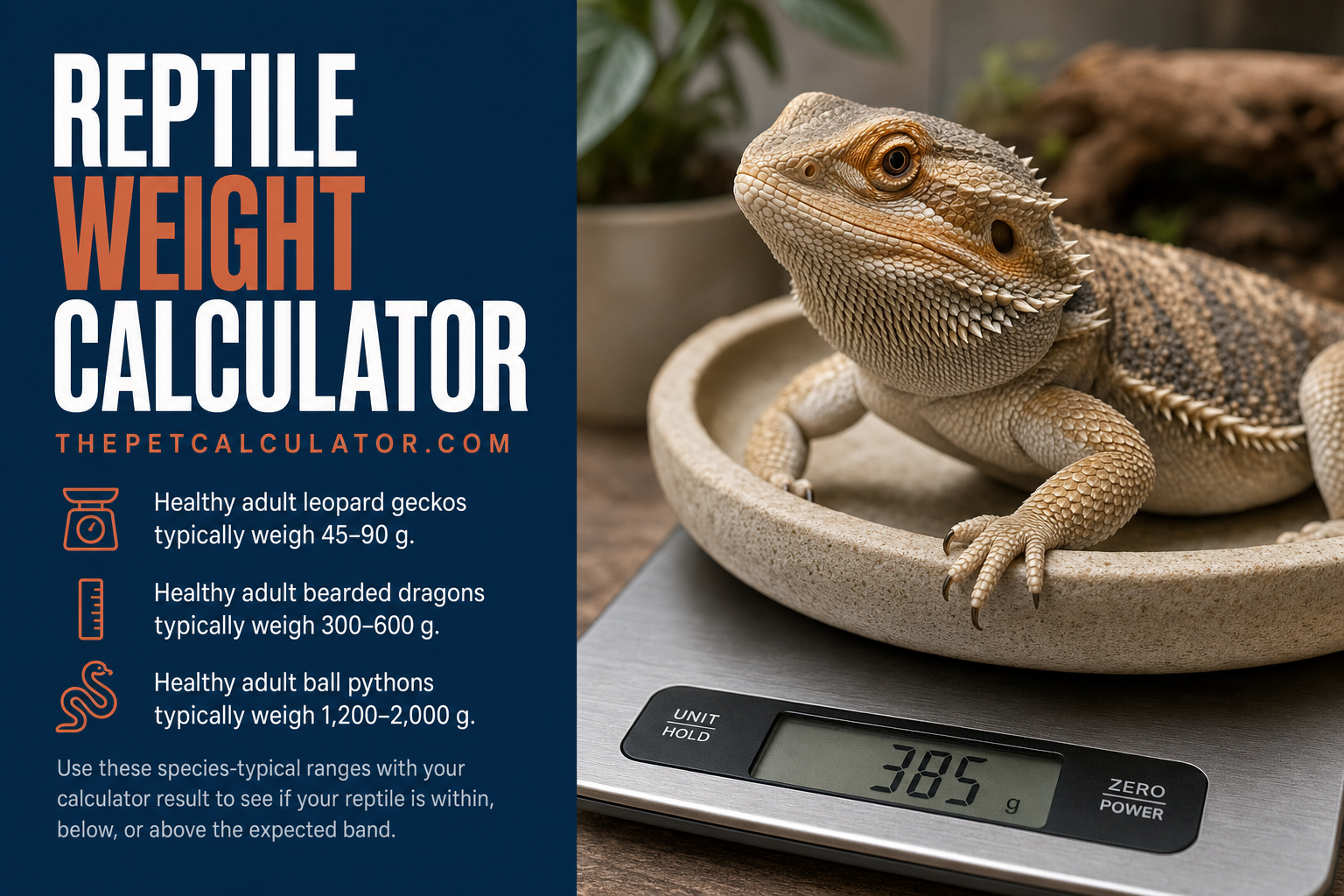
Reptile Weight Calculator | Ideal Weight Range Calculator by Species - Free Tool
Free reptile weight calculator. Calculate ideal weight ranges by species, compare your reptile

This tool helps estimate the daily calorie requirements for your reptile based on their weight, species, age, feeding frequency, temperature gradient, and UVB exposure.
Simply fill out the fields and click Calculate to get started.
If unsure about the temperature gradient or UVB exposure, the default values of 75°F for cool side, 90°F for warm side, and 10 hours of UVB exposure per day will be used.
| Species | Description | Feeding Frequency |
|---|---|---|
| Bearded Dragon | A popular pet reptile known for its distinctive beard and omnivorous diet. | Varies; typically daily to every other day, depending on age and size. |
| Leopard Gecko | A small, nocturnal lizard with a spotted pattern and a diet primarily of insects. | Varies; typically every 2-3 days, adjust based on appetite and health. |
| Ball Python | A non-venomous snake known for its docile nature and ability to coil into a tight ball. | Varies; typically every 5-7 days, adjust based on age, size, and metabolism. |
| Corn Snake | A slender, brightly colored snake native to North America, popular in the pet trade. | Varies; typically every 5-10 days, adjust based on size and health. |
| Tortoise | A land-dwelling reptile with a shell, known for longevity and herbivorous diet. | Varies; typically every 1-3 days for juveniles, less frequently for adults. |
| Iguana | A large, herbivorous lizard native to Central and South America, requiring UVB light. | Varies; typically daily to every other day, adjust based on age, size, and diet. |
| Chameleon | A lizard with the ability to change color, known for its long, sticky tongue and insectivorous diet. | Varies; typically every 1-2 days, adjust based on size, health, and activity. |
| Monitor Lizard | Large, carnivorous lizards found in various parts of the world, requiring spacious enclosures. | Varies; typically every 5-14 days, adjust based on size, age, and diet. |
| Factor | Description |
|---|---|
| Weight | The reptile's weight in pounds (lbs), used to calculate base calorie needs. |
| Species | Select the reptile species from the dropdown list; different species have different calorie requirements. |
| Age | Reptile's age in years, influencing calorie needs (young reptiles typically need more). |
| Feeding Frequency | How often the reptile is fed per week, affecting total daily calorie intake. |
| Temperature | Provide the average daily temperatures of the enclosure to adjust calorie needs based on metabolic rate. |
| UVB Exposure | The daily duration of UVB light exposure, crucial for calcium metabolism and overall health. |
Our reptile nutrition calculator estimates how many calories your reptile needs each day based on its species, weight, age, feeding frequency, enclosure temperature, and UVB exposure. Because reptiles are ectotherms that rely on their environment for warmth, their energy needs work very differently from dogs and cats. This tool, which doubles as a bearded dragon calculator and works for geckos, snakes, turtles, and tortoises, gives you a species-aware starting point for planning meals.
Unlike mammals, reptiles do not spend energy keeping their bodies warm. Instead, their metabolic rate rises and falls with the temperature of their enclosure. That is why the calculator asks for your warm and cool side temperatures alongside weight and species. A bearded dragon kept at a proper basking temperature digests food and burns energy far faster than one kept too cool.
Treat the calculator's output as an informed starting estimate rather than an exact prescription. Every reptile is an individual, and husbandry, health, and season all shift real needs. Weigh your reptile regularly and adjust portions based on body condition.
The single most important thing to get right is matching the diet to your reptile's natural feeding style. Feeding the wrong type of food is one of the most common causes of illness in captive reptiles.
When you select a species in the calculator, the estimate reflects that feeding style. Always confirm the specific food list for your exact species, since even closely related reptiles can have different requirements.
No diet works if the enclosure is set up incorrectly. Reptiles need the right temperature to digest food and the right light to use the nutrients in it. Get these wrong and even a perfect meal plan will fail.
The temperature and UVB fields in the calculator are there because these factors change how much energy your reptile burns and how well it uses its food. Feeding, heating, and lighting are three parts of one system.
Many of the health problems seen in captive reptiles trace back to diet and husbandry rather than infection. Recognizing the early signs lets you correct the diet before serious damage occurs.
Dusting insects with calcium, offering a balanced variety of foods, and maintaining proper UVB are the three best defenses. If you notice any of these signs, consult a reptile veterinarian, since some deficiencies cause permanent damage if left untreated.
Feeding frequency matters as much as portion size, and it changes dramatically with age. Growing reptiles eat far more often than adults. The examples below are general starting points; confirm against a care sheet for your exact species.
Enter your feeding frequency into the calculator so the daily estimate reflects your actual routine. If your reptile is gaining or losing weight against its ideal body condition, adjust both portion size and how often you feed.
A bearded dragon's calorie needs depend on its weight, age, and enclosure temperature. Fast-growing juveniles need proportionally more energy than adults, and a properly heated dragon burns more than a cool one. Enter your dragon's details into the calculator above for a tailored estimate, then adjust based on its body condition over time.
Reptiles are ectotherms, meaning they rely on external heat rather than burning calories to stay warm. Their metabolism, appetite, and ability to digest food all rise and fall with enclosure temperature. A reptile kept too cool may refuse food or fail to digest it, which is why the calculator asks for your warm and cool side temperatures.
Most insectivorous and herbivorous reptiles benefit from calcium supplementation because their diets are naturally low in calcium relative to phosphorus. Dusting insects or greens with a calcium powder, combined with adequate UVB, helps prevent metabolic bone disease. Snakes that eat whole prey usually get complete nutrition and rarely need extra calcium.
Snake feeding frequency depends on species, age, and size. Hatchlings and juveniles typically eat every 5 to 7 days, while adults may eat only every 1 to 2 weeks. Feeding prey that is roughly the width of the snake's widest point is a common guideline. Overfeeding adult snakes is a frequent cause of obesity.
Watch for lethargy, weight loss, soft or deformed bones, poor or difficult shedding, swollen eyes, and changes in appetite or skin color. Many of these point to deficiencies in calcium, vitamins, or hydration, or to husbandry problems like inadequate UVB. If you see these signs, review the diet and consult a reptile veterinarian promptly.
FAQs
The ideal diet for your reptile depends on its species. Research or consult a vet to understand the specific dietary needs of your reptile, which may include insects, leafy greens, or commercial reptile food.
Feeding frequency varies by species and age. Some reptiles require daily feeding, while others may only need food a few times a week. Consult guidelines specific to your reptile species.
Reptiles need a balanced diet including proteins, fats, vitamins, and minerals. Key nutrients can vary significantly depending on the species.
Signs of nutritional issues in reptiles include lethargy, abnormal shedding, weight loss, and changes in skin color or texture. Consult a vet if you notice any of these symptoms.
For specific health conditions, dietary modifications may be necessary. Consult a vet for a tailored diet plan that addresses your reptile's health needs.
Free reptile weight calculator. Calculate ideal weight ranges by species, compare your reptile

Free bird nutrition calculator and bird calorie calculator. Calculate your bird
Free cat food carb calculator. Calculate carbohydrate content in wet and dry cat food from the guaranteed analysis label. Compare carbs on a dry matter basis. Essential for low-carb and diabetic cat diets.

Free cat calorie calculator. How many calories should a cat eat? Calculate your cat\