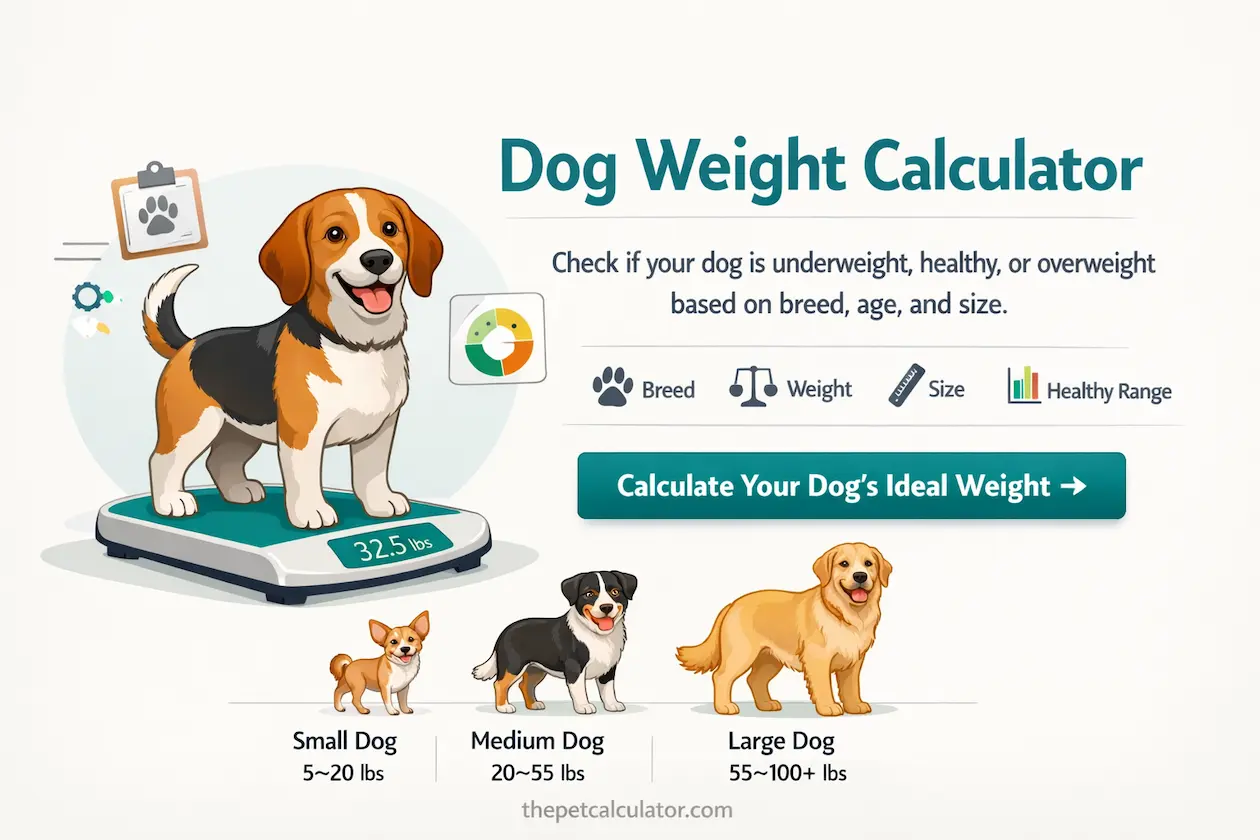
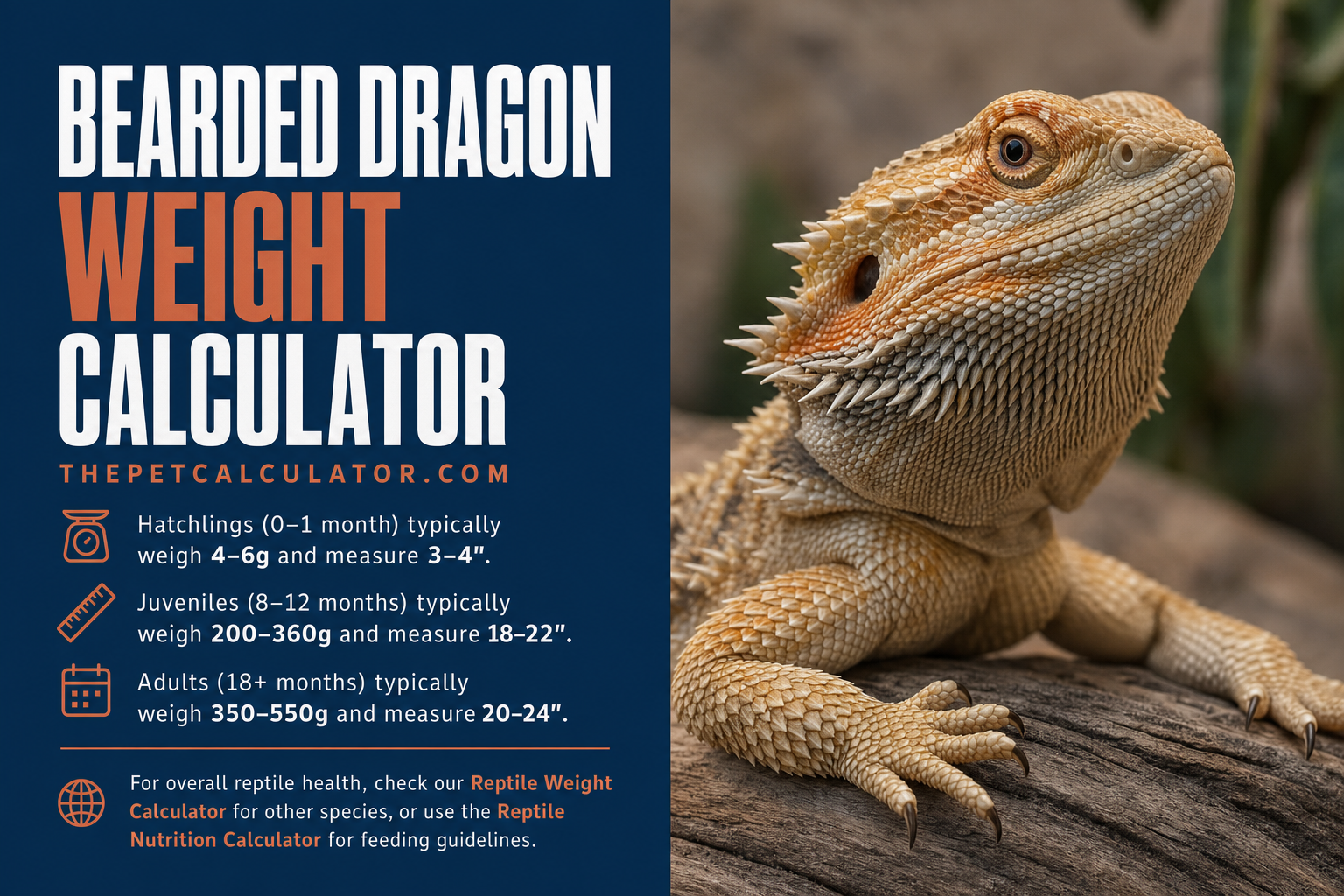
How Much Should My Dog Weigh?
The ideal weight for a dog varies enormously by breed. A healthy Chihuahua may weigh 5 lbs, while a healthy Great Dane can top 175 lbs. Because of this range, ideal weight is always expressed as a band rather than a single target. Our calculator compares your dog's weight to breed-specific standards, but here is a quick reference for popular breeds:
| Breed | Female (lbs) | Male (lbs) | Adult Age |
|---|
| Chihuahua | 3–6 lbs | 3–6 lbs | 9–12 months |
| French Bulldog | 16–24 lbs | 20–28 lbs | 12 months |
| Beagle | 18–25 lbs | 22–28 lbs | 18 months |
| Border Collie | 27–42 lbs | 30–45 lbs | 15 months |
| Labrador Retriever | 55–70 lbs | 65–80 lbs | 18–24 months |
| Golden Retriever | 55–65 lbs | 65–75 lbs | 18–24 months |
| German Shepherd | 50–70 lbs | 65–90 lbs | 24–36 months |
| Rottweiler | 80–100 lbs | 95–135 lbs | 24–36 months |
| Great Dane | 110–140 lbs | 140–175 lbs | 24–36 months |
Dog Weight by Age: Growth Milestones
Puppies gain weight fastest in their first six months, then growth slows as they approach adult size. The timeline differs sharply by size class: toy breeds finish growing by around 9 to 12 months, while giant breeds keep filling out until 2 to 3 years old. The chart below shows the percentage of adult weight a typical dog reaches at each stage:
| Age | Small Breeds | Medium/Large Breeds | Growth Notes |
|---|
| 8 weeks | ~15% of adult | ~10% of adult | Typical age to bring a puppy home |
| 3 months | ~30% of adult | ~25% of adult | Fast growth, weigh weekly |
| 6 months | ~75% of adult | ~55% of adult | Growth begins to slow |
| 12 months | ~100% of adult | ~80% of adult | Small breeds near full size |
| 18 months | 100% of adult | ~95% of adult | Most large breeds nearly done |
| 24–36 months | 100% of adult | 100% of adult | Giant breeds reach full weight |
To check whether your dog's current weight is healthy, use our Dog BMI Calculator for a body condition score assessment. For daily calorie needs at any weight, see the Dog Nutrition Calculator.
How to Use the Dog Weight Calculator
Getting an accurate reading takes less than a minute. Follow these steps for the most reliable result:
- Weigh your dog. Small dogs can be weighed on a bathroom scale by holding them and subtracting your own weight. For larger dogs, most vet clinics have a walk-on floor scale you can use for free.
- Enter the weight in pounds. Convert from kilograms if needed (1 kg = 2.2 lbs). Weigh at the same time of day, ideally before a meal, for consistency.
- Select the breed. Choose the breed that best matches your dog. For mixed breeds, pick the closest match by adult size and build, or estimate from the dominant breed in the mix.
- Review the assessment. The calculator compares your dog's weight to the ideal range and flags whether they are underweight, ideal, or overweight.
Weight alone does not tell the whole story. Pair the result with a hands-on body condition assessment for the clearest picture of your dog's health.
Body Condition Score: A Better Measure Than Weight Alone
Because frame size varies so much between dogs, even within a breed, veterinarians rely on the Body Condition Score (BCS), a 1 to 9 scale that assesses fat coverage by feel and sight. A score of 4 to 5 is ideal. You can check your own dog at home:
- Ribs: You should feel the ribs easily with only a thin layer of fat over them, like the back of your hand. If you have to press to find them, your dog is likely overweight.
- Waist: Viewed from above, there should be a clear waist tucking in behind the ribs. A straight or bulging outline suggests excess weight.
- Abdomen: Viewed from the side, the belly should tuck up toward the hind legs rather than hang level or sag.
For a guided walkthrough with scoring, use our Dog BMI Calculator or read the full Dog Body Condition Score guide, which translate these visual and tactile checks into a clear result.
Small, Medium, and Large Breeds: How Size Class Changes Ideal Weight
Dogs span a wider size range than any other domestic species, and that range is usually grouped into size classes. Knowing your dog's class helps set realistic expectations for adult weight and growth timeline:
- Toy and small (under 22 lbs): Chihuahuas, Yorkshire Terriers, Pomeranians. They finish growing early, around 9 to 12 months, and even half a pound of gain is significant on their small frame.
- Medium (22–55 lbs): Beagles, Border Collies, Cocker Spaniels. They typically reach adult weight by 12 to 15 months.
- Large (55–90 lbs): Labradors, German Shepherds, Golden Retrievers. Growth continues to 18 to 24 months, and joint-friendly growth matters.
- Giant (over 90 lbs): Great Danes, Mastiffs, Saint Bernards. They keep growing until 2 to 3 years and need controlled growth to protect developing joints.
Larger breeds are more prone to orthopedic issues, so keeping them lean during growth is especially important. Overfeeding a large-breed puppy to grow it faster increases the risk of hip and elbow problems later in life.
Why Dog Weight Matters for Health
An estimated 55 to 60% of dogs in the United States are overweight or obese, making it the most common preventable health problem in dogs. Studies show that dogs kept at a lean, ideal weight live on average around two years longer than their overweight littermates.
Carrying extra weight raises the risk of several serious conditions:
- Osteoarthritis and joint stress: Extra weight accelerates cartilage wear, worsening hip dysplasia and arthritis, especially in large breeds.
- Diabetes: Obesity increases insulin resistance and the risk of type 2 diabetes.
- Heart and respiratory strain: Excess fat forces the heart and lungs to work harder, reducing stamina and heat tolerance.
- Shorter lifespan: Overweight dogs face a higher overall mortality risk and reduced quality of life.
Underweight dogs carry their own risks, from weakened immunity to signs of underlying illness such as parasites or dental disease. Keeping your dog within its ideal range is one of the most effective ways to extend both lifespan and quality of life.
Worked Example: Is a 70 lb Dog Overweight?
Imagine a 2-year-old male dog weighing 70 lbs. Whether that number is healthy depends entirely on breed:
- Beagle (ideal 22–28 lbs): At 70 lbs this dog would be more than double its ideal range, a severe obesity case needing urgent veterinary attention.
- Labrador Retriever (ideal 65–80 lbs): At 70 lbs, this dog sits comfortably within the ideal range and is a healthy size.
- Rottweiler (ideal 95–135 lbs): At 70 lbs, this dog is well under its expected range and may be underweight, warranting a vet check.
This is exactly why a single weight number can be misleading, and why the calculator adjusts the assessment by breed. If your dog is over its range, our Dog Weight Loss Calculator builds a safe, gradual plan to reach target weight.
Frequently Asked Questions
What is an ideal weight range for dogs?
Ideal weight ranges vary significantly by breed. Each breed has natural size variations, so ideal weight is expressed as a range rather than a single number. Our calculator uses breed-specific standards to provide accurate weight ranges.
How do I know if my dog is at a healthy weight?
Compare your dog's current weight to the ideal weight range for their breed using our calculator. You can also use our Dog BMI Calculator to assess body condition, as Body Condition Score (BCS) is often more reliable than weight alone.
What should I do if my dog is underweight?
If your dog is underweight, consult your veterinarian immediately. Underweight dogs may have underlying health issues that need to be addressed. A veterinarian can help create a safe weight gain plan and rule out medical causes.
What should I do if my dog is overweight?
If your dog is overweight, consult your veterinarian for a weight loss plan. They may recommend a calorie-restricted diet and increased exercise. You can also use our Dog Weight Loss Calculator to create a personalized weight loss plan.
My dog is a mixed breed. Which breed should I select?
For mixed breed dogs, select the breed that most closely matches your dog's size and build. If unsure, consult your veterinarian. Body Condition Score (BCS) assessment may be more helpful than breed-specific weight ranges for mixed breeds.
How does this differ from a BMI calculator?
A weight calculator compares your dog's weight to breed standards, while a BMI calculator assesses body condition using visual and tactile assessment (Body Condition Score). Both tools provide valuable information, and using them together gives the most complete picture of your dog's health.