Australian Shepherd Weight Calculator | Is Your Aussie a Healthy Weight? | The Pet Calculator
Check your Australian Shepherd\
Last updated: July 17, 2026
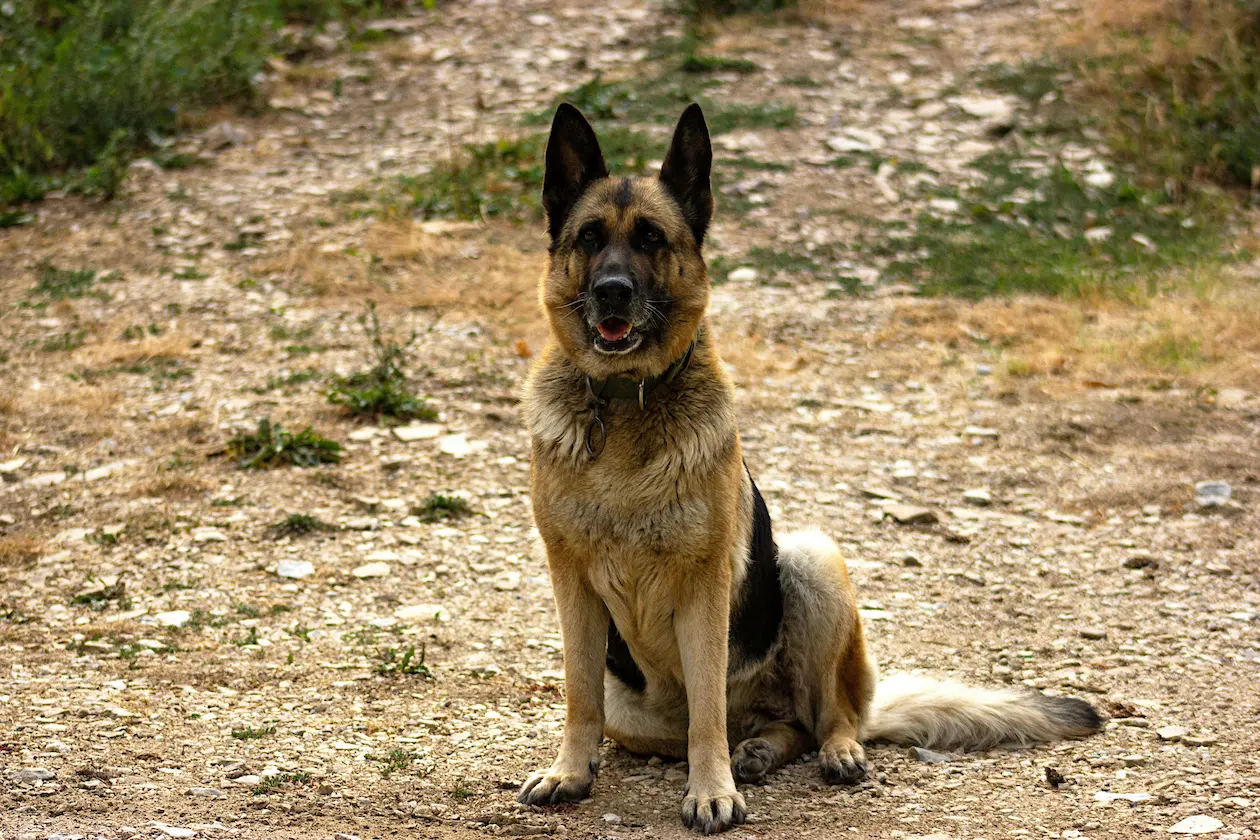
Enter your German Shepherd's sex, age, and current weight to check if they are within the healthy weight range for their stage of life.
German Shepherds are athletic, intelligent working dogs. Maintaining a lean, healthy weight is especially important for this breed because they are highly prone to hip and elbow dysplasia — every excess pound places additional stress on their joints.
German Shepherds come in two distinct lines, each with different physical characteristics and weight ranges:
Your GSD's ideal weight depends on which line they come from. Working line dogs are naturally leaner and should not be pushed to show line weights. Conversely, show line dogs may legitimately weigh more without being overweight. Always consider your dog's individual build, muscle mass, and your veterinarian's assessment.
Female German Shepherds typically weigh 10-20 pounds less than males at the same age. This chart shows the healthy weight ranges for both sexes from puppyhood through adulthood:
| Age | Male Range | Male Avg | Female Range | Female Avg |
|---|---|---|---|---|
| 8 weeks | 11-17 lbs | 14 lbs | 8-13 lbs | 10 lbs |
| 3 months | 22-31 lbs | 26 lbs | 17-26 lbs | 21 lbs |
| 4 months | 31-42 lbs | 36 lbs | 24-34 lbs | 29 lbs |
| 5 months | 39-52 lbs | 45 lbs | 31-43 lbs | 37 lbs |
| 6 months | 47-61 lbs | 54 lbs | 37-50 lbs | 43 lbs |
| 8 months | 55-71 lbs | 63 lbs | 44-57 lbs | 50 lbs |
| 10 months | 60-78 lbs | 69 lbs | 48-61 lbs | 54 lbs |
| 12 months | 63-83 lbs | 73 lbs | 50-65 lbs | 57 lbs |
| 18 months | 65-88 lbs | 76 lbs | 50-68 lbs | 59 lbs |
| Adult (2+) | 65-90 lbs | 77 lbs | 50-70 lbs | 60 lbs |
German Shepherds experience rapid growth during their first year, with most growth occurring in the first 12-18 months. Understanding these growth phases helps you ensure proper nutrition and recognize when your GSD has reached full maturity.
Your GSD puppy gains 1-2 pounds per week. At 4 months, males average 36 lbs and females average 29 lbs. Proper nutrition is critical during this phase to support bone and muscle development. Feed high-quality large-breed puppy food 3-4 times daily.
Growth continues rapidly. By 8 months, males reach 63 lbs (average) and females reach 50 lbs. This is when skeletal development is most vulnerable. Avoid excessive jumping or running on hard surfaces. Transition from 3-4 meals to 2 meals daily by 6 months.
Growth slows but continues. By 12 months, males average 73 lbs and females average 57 lbs. At 18 months, most GSDs reach near-adult size (males 76 lbs, females 59 lbs). Mental development continues—this is a critical period for training and socialization.
Most German Shepherds reach full physical maturity by 18-24 months. Final adult weight: males 65-90 lbs (average 77 lbs), females 50-70 lbs (average 60 lbs). Muscle development and bone density continue to mature until age 3. Switch to adult dog food and feed 2 meals daily for optimal weight management.
Obesity is one of the most common health issues in German Shepherds. A healthy GSD should have visible ribs, a defined waist, and no abdominal sag. Compare your dog to these visual standards:
Extra weight puts severe strain on hip joints. Overweight GSDs have 2-3x higher incidence of hip dysplasia and faster progression of joint disease.
Obese GSDs live 1.8-2 years shorter on average. Maintaining healthy weight can add years to your dog's life.
Extra pounds compound the strain on knees, ankles, and back. GSDs already prone to degenerative myelopathy face faster disease progression.
Overweight GSDs tire quickly, can't participate in activities they love, and are at higher risk for heat exhaustion and bloat.
The Body Condition Score (BCS) is a 9-point scale vets use to assess your dog's weight status. Here are the three main categories for German Shepherds:
Action: Consult your vet. May indicate parasites, illness, or inadequate nutrition.
Goal: This is the target range for maximum health and longevity.
Action: Discuss diet and exercise changes with your vet. Start weight management program.
Hip dysplasia is a genetic developmental disorder affecting the hip joint. Approximately 19% of German Shepherds have hip dysplasia according to the Orthopedic Foundation for Animals (OFA). While genetics cannot be changed, weight management is one of the most important factors in controlling pain and slowing disease progression.
Studies show that maintaining ideal weight is one of the most effective treatments for hip dysplasia. Lean GSDs with hip dysplasia often have minimal pain and can live normal lives. Overweight dogs with mild dysplasia can develop severe lameness. This is one area where weight truly is a life-changer.
German Shepherds are predisposed to several serious health conditions. Maintaining a healthy weight significantly reduces risk and slows progression of many of these disorders:
Overweight GSDs have 2-3x higher rates of painful joint disease. Every pound matters for dogs with genetic predisposition. Weight management is the most cost-effective preventive measure.
This progressive spinal cord disease affects 10-15% of GSDs (especially the homozygous dm/dm genotype). Obesity accelerates onset and progression. Weight control may slow neurological decline by reducing spinal inflammation.
Up to 7% of GSDs develop EPI, causing poor digestion and weight loss. Conversely, obesity can worsen pancreatic stress. Feed high-quality, digestible food at appropriate portions.
This life-threatening emergency is fatal in 25-40% of cases. Overweight GSDs have higher risk. Feed multiple smaller meals, avoid exercise immediately after eating, and maintain lean body weight.
GSDs frequently suffer food and environmental allergies. Obesity worsens allergic inflammation. Maintaining healthy weight, combined with high-quality nutrition, improves skin and coat health.
Proper nutrition and portion control are essential for maintaining a healthy weight throughout your German Shepherd's life. Calorie requirements vary significantly by age, activity level, and metabolism:
German Shepherds have an average lifespan of 9-13 years. However, weight dramatically impacts longevity. According to the Purina Lifetime Study, overweight and obese dogs live 1.8 years shorter than lean dogs. For a GSD, this can mean losing nearly 2 years of life:
Research shows that overweight dogs brought to ideal weight gain an average of 1.8 years of healthy lifespan. Even modest weight loss (5-10%) improves mobility, reduces joint pain, and extends quality of life. This is one of the most powerful health interventions available.
For international reference, here are German Shepherd weights converted to kilograms:
| Age | Male (kg) | Male Avg (kg) | Female (kg) | Female Avg (kg) |
|---|---|---|---|---|
| 8 weeks | 5-8 kg | 6.4 kg | 3.6-5.9 kg | 4.5 kg |
| 3 months | 10-14 kg | 11.8 kg | 7.7-11.8 kg | 9.5 kg |
| 4 months | 14-19 kg | 16.3 kg | 11-15.4 kg | 13.2 kg |
| 5 months | 18-24 kg | 20.4 kg | 14-19.5 kg | 16.8 kg |
| 6 months | 21-28 kg | 24.5 kg | 17-23 kg | 19.5 kg |
| 8 months | 25-32 kg | 28.6 kg | 20-26 kg | 22.7 kg |
| 10 months | 27-35 kg | 31.3 kg | 22-28 kg | 24.5 kg |
| 12 months | 29-38 kg | 33.1 kg | 23-29 kg | 25.9 kg |
| 18 months | 29-40 kg | 34.5 kg | 23-31 kg | 26.8 kg |
| Adult (2+) | 29-41 kg | 35 kg | 23-32 kg | 27.2 kg |
German Shepherd crosses combine GSD traits with other breeds. Final weight depends heavily on which breed they're mixed with and which genes they inherit:
Expected Adult Weight: 55-90 lbs (25-41 kg)
Labradors are similar in size to GSDs, so Shepradors typically fall in the GSD range or slightly higher. They're athletic, loyal, and prone to hip dysplasia and obesity from both parent breeds. Watch portions carefully as Labs have poor satiety signals.
Expected Adult Weight: 50-85 lbs (23-39 kg)
Huskies are slightly lighter and leaner than GSDs. The mix often inherits the husky's drive for exercise and can be prone to hip dysplasia from the GSD side. These dogs need extensive daily exercise and mental stimulation.
Expected Adult Weight: 75-110 lbs (34-50 kg)
Rottweilers are heavier than GSDs, so crosses tend to be larger. These dogs have higher hip dysplasia risk from both breeds and need careful weight management. Their heavier bone structure means weight becomes even more critical for joint health.
Newborn German Shepherd puppies are remarkably tiny compared to their adult size. Proper nutrition from birth is crucial for healthy development:
| Age | Male Weight | Female Weight | Milestone |
|---|---|---|---|
| Birth | 1-1.5 lbs | 0.8-1.2 lbs | Eyes/ears closed |
| 1 week | 2-3 lbs | 1.5-2.5 lbs | Rapid weight gain |
| 2 weeks | 4-5 lbs | 3-4 lbs | Eyes opening |
| 4 weeks | 7-9 lbs | 5.5-7.5 lbs | Weaning begins |
| 8 weeks | 11-17 lbs | 8-13 lbs | Ready for adoption |
Puppies should double their birth weight by one week and triple it by two weeks. By 8 weeks (when ready for adoption), puppies have gained 10-15x their birth weight. Ensure quality breeder care during the critical first 8 weeks—poor early nutrition can stunt growth and cause lifelong problems.
Contact your veterinarian if your German Shepherd shows any of these signs:
Use this at-a-glance summary to track your German Shepherd's weight and health status:
| Factor | Male GSD | Female GSD |
|---|---|---|
| Adult healthy weight | 65-90 lbs (29-41 kg) | 50-70 lbs (23-32 kg) |
| Adult average weight | 77 lbs (35 kg) | 60 lbs (27.2 kg) |
| Daily calorie needs (adult) | 1,700-2,200 kcal | 1,400-1,900 kcal |
| Puppy daily calories (6-8 mo) | 1,500-1,800 kcal | 1,200-1,500 kcal |
| Age at full maturity | 18-24 months | |
| Average lifespan | 9-13 years (healthy weight: +1.8 years) | |
| Hip dysplasia prevalence | 19% (OFA data) | |
| Exercise needs (daily) | 60-120 minutes of structured activity | |
| Ideal body condition | BCS 4-5: ribs easily felt, waist visible, tucked abdomen | |
To calculate how many calories your German Shepherd needs each day, use our Dog Calorie Calculator, and for daily food portions our Dog Feeding Calculator.
Check your Australian Shepherd\

Free Beagle weight calculator — check your Beagle\
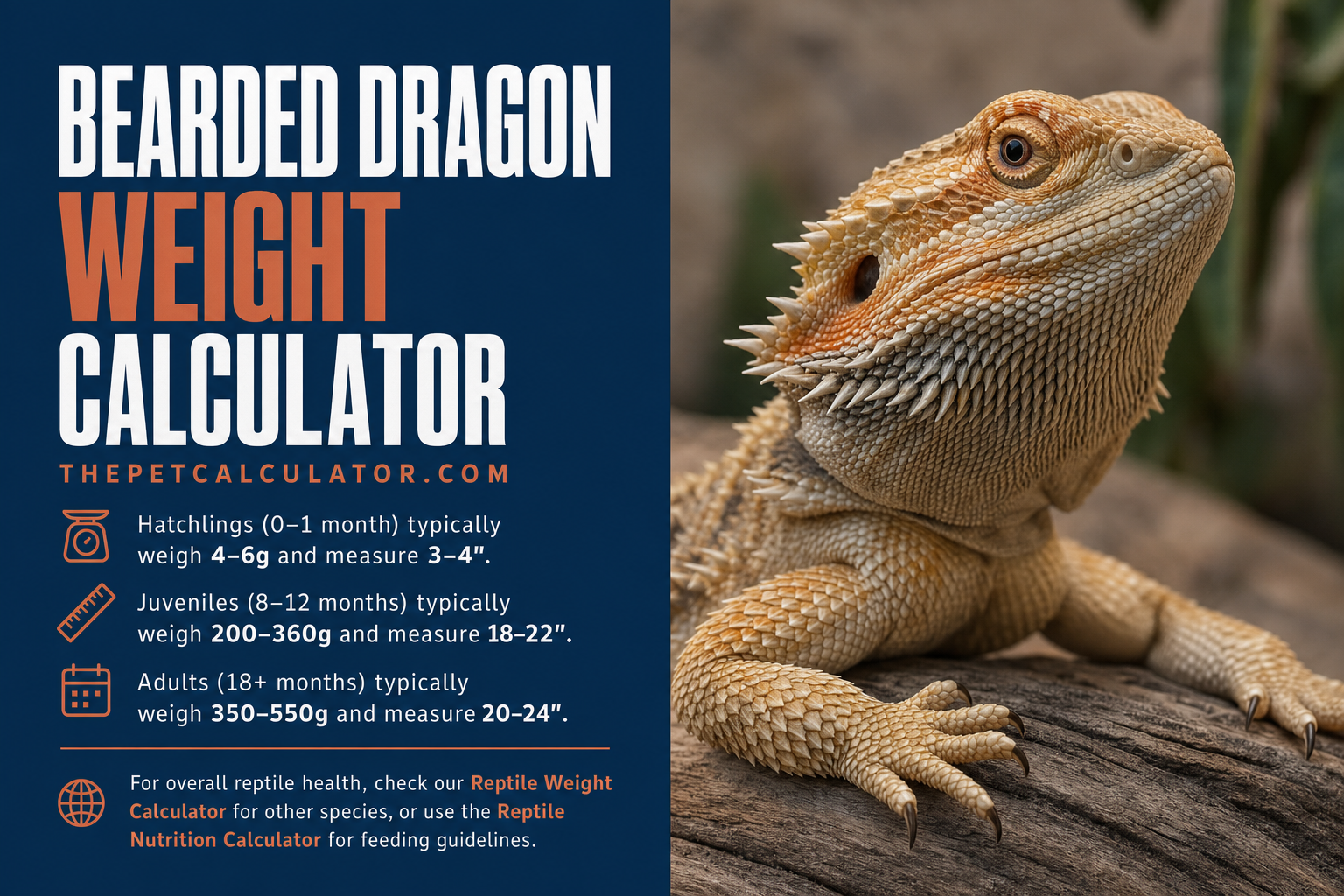
Free bearded dragon weight calculator. Check if your bearded dragon is a healthy weight for their age. Includes weight-by-age chart from hatchling to adult, growth milestones, and care tips.
Free dog calorie calculator by breed. Find out exactly how many calories your dog needs per day by weight, breed, age, and activity level. Get instant kcal and feeding portions for Labradors, German Shepherds, Chihuahuas, and every breed in between. Try it now.

Free puppy calorie calculator and nutrition tool. Calculate your puppy\
Free senior dog calorie calculator. Calculate your older dog\
FAQs
Adult male German Shepherds typically weigh 65–90 lbs (29–41 kg), while females weigh 50–70 lbs (23–32 kg). The ideal weight depends on your individual dog's build, bone structure, and breed line. Working-line GSDs tend to be leaner (55–75 lbs for males), while show-line dogs tend to be heavier (75–90 lbs). Your vet can assess your specific dog's ideal weight using body condition scoring.
Adult female German Shepherds should weigh 50–70 lbs (23–32 kg), with an average of about 60 lbs. At 6 months, a female GSD typically weighs 37–50 lbs. Female GSDs reach their adult weight by 18–24 months. Weight varies based on genetics, diet, and exercise level. Use the calculator above to check your female GSD's weight against healthy ranges for her age.
Key weight milestones for male GSDs: 8 weeks = 11–17 lbs, 3 months = 22–31 lbs, 6 months = 47–61 lbs, 12 months = 63–83 lbs, adult (2+ years) = 65–90 lbs. Females are 10–20 lbs lighter at each stage. See the full growth chart above for detailed age-by-age weights for both sexes.
A healthy GSD should have: (1) a visible waist when viewed from above, (2) ribs easily felt with gentle pressure, (3) a tucked abdomen from the side, and (4) no excessive fat deposits on hips or spine. If you cannot feel the ribs without pressing hard, or if there is no visible waist, your GSD is likely overweight. Use the body condition score guide on this page.
Compare your dog to the body condition score visual guide above. Key signs of an overweight GSD: barrel-shaped body with no waist, ribs difficult to feel, abdominal sag instead of tuck, slow or reluctant movement, heavy breathing during mild exercise. Even 5–10 extra pounds significantly increases hip dysplasia risk. Use our calculator to check against healthy ranges.
Hip dysplasia is a genetic developmental disorder where the hip joint forms abnormally — the socket is too shallow and the ball of the femur does not fit properly. This causes pain, inflammation, and eventually arthritis. About 19% of German Shepherds are affected according to OFA data. Excess weight dramatically worsens outcomes because it increases mechanical stress on the malformed joint.
German Shepherds with hip dysplasia can still live full, happy lives of 9–13 years if managed properly. Life expectancy depends on severity and weight management. Lean dogs with mild dysplasia often show minimal symptoms. Overweight dogs with dysplasia may develop severe pain and reduced mobility by age 5–7. Weight management is the single most impactful factor you can control.
Adult German Shepherds need approximately 1,700–2,200 kcal per day, depending on size, age, and activity level. Puppies need 1,200–1,800 kcal split into 3–4 meals. Seniors need 1,400–1,800 kcal. Always measure portions — do not eyeball. Use our Dog Feeding Calculator for a personalised recommendation based on your GSD's specific details.
GSD puppies (8 weeks–6 months) need 1,200–1,800 kcal daily split into 3–4 meals. Always use a large-breed puppy formula to support controlled bone growth. Overfeeding GSD puppies causes too-rapid growth, stressing developing joints and increasing hip dysplasia risk. Follow breeder or vet-recommended portions and weigh monthly.
German Shepherds reach their full height by 12–18 months but continue to fill out with muscle mass until 2–3 years of age. Males mature slower than females. If your GSD is still gaining significant weight after 24 months, it may be fat gain rather than growth — reassess their diet and consult your vet.
Adult male German Shepherds weigh 29–41 kg (65–90 lbs). Adult females weigh 23–32 kg (50–70 lbs). To convert lbs to kg, multiply by 0.4536. To convert kg to lbs, multiply by 2.2046. See the full kg conversion table on this page for all age stages.
An underweight GSD shows: prominently visible ribs, spine, and hip bones without touching; very exaggerated waist when viewed from above; pronounced belly tuck from the side; minimal muscle mass especially along the spine. If your GSD is underweight, rule out medical conditions (parasites, EPI, thyroid issues) with your vet before simply increasing food.
Working-line German Shepherds are typically leaner and lighter — males 65–80 lbs, females 50–65 lbs — with a straighter back and more athletic build. Show-line (West German) GSDs tend to be heavier — males 75–90 lbs, females 60–70 lbs — with a more sloped back and thicker bone structure. Both lines should maintain a lean body condition regardless of their build type.
The average German Shepherd lifespan is 9–13 years. Lean, healthy-weight GSDs consistently live longer than overweight ones. The landmark Purina Lifetime Study showed that dogs kept at ideal weight lived a median of 1.8 years longer than their overweight counterparts. Maintaining your GSD at a healthy weight is the single highest-return health investment.
German Shepherds typically live 9–13 years. Factors that extend lifespan include: maintaining ideal weight (the biggest factor), regular exercise, quality nutrition, routine veterinary care, and genetic health screening. Overweight GSDs face shortened lifespans due to increased cancer risk, joint disease, and metabolic disorders.
A German Shepherd Rottweiler mix (Shepweiler) typically weighs 75–115 lbs as an adult. Males tend toward the higher end. These are large, powerful dogs that inherit size from both parent breeds. The general Dog Weight Calculator is a better tool for mixes — breed-specific ranges won't apply directly. Consult your vet for an ideal weight target.
A German Shepherd Labrador mix (Sheprador) typically weighs 55–90 lbs as an adult, with males at the higher end. They inherit the Lab's food motivation and the GSD's athletic build. Both parent breeds are prone to hip dysplasia, making weight management especially critical for this mix. Use our Dog Weight Calculator for mixed breeds.
Adult German Shepherds need 1–2 hours of vigorous exercise daily. This should include a combination of walking, running, fetch, and mental stimulation (training, puzzle toys, scent work). GSDs are working dogs — inadequate exercise leads to weight gain and behavioural problems. Puppies should have controlled exercise to protect developing joints.
Yes. While German Shepherds are not as prone to IVDD as Dachshunds, they can develop degenerative myelopathy (DM) and lumbosacral stenosis — conditions worsened by excess weight. The added mechanical load on the spine accelerates degeneration. Maintaining a lean body condition protects the spine and joints throughout your GSD's life.
A healthy GSD has: ribs easily felt with light pressure, a visible waist from above, a tucked abdomen from the side, and good muscle definition along the spine and hindquarters. For males, this is typically 65–90 lbs; for females, 50–70 lbs. The number on the scale matters less than body condition — a muscular 85-lb male can be healthier than a fat 75-lb male.