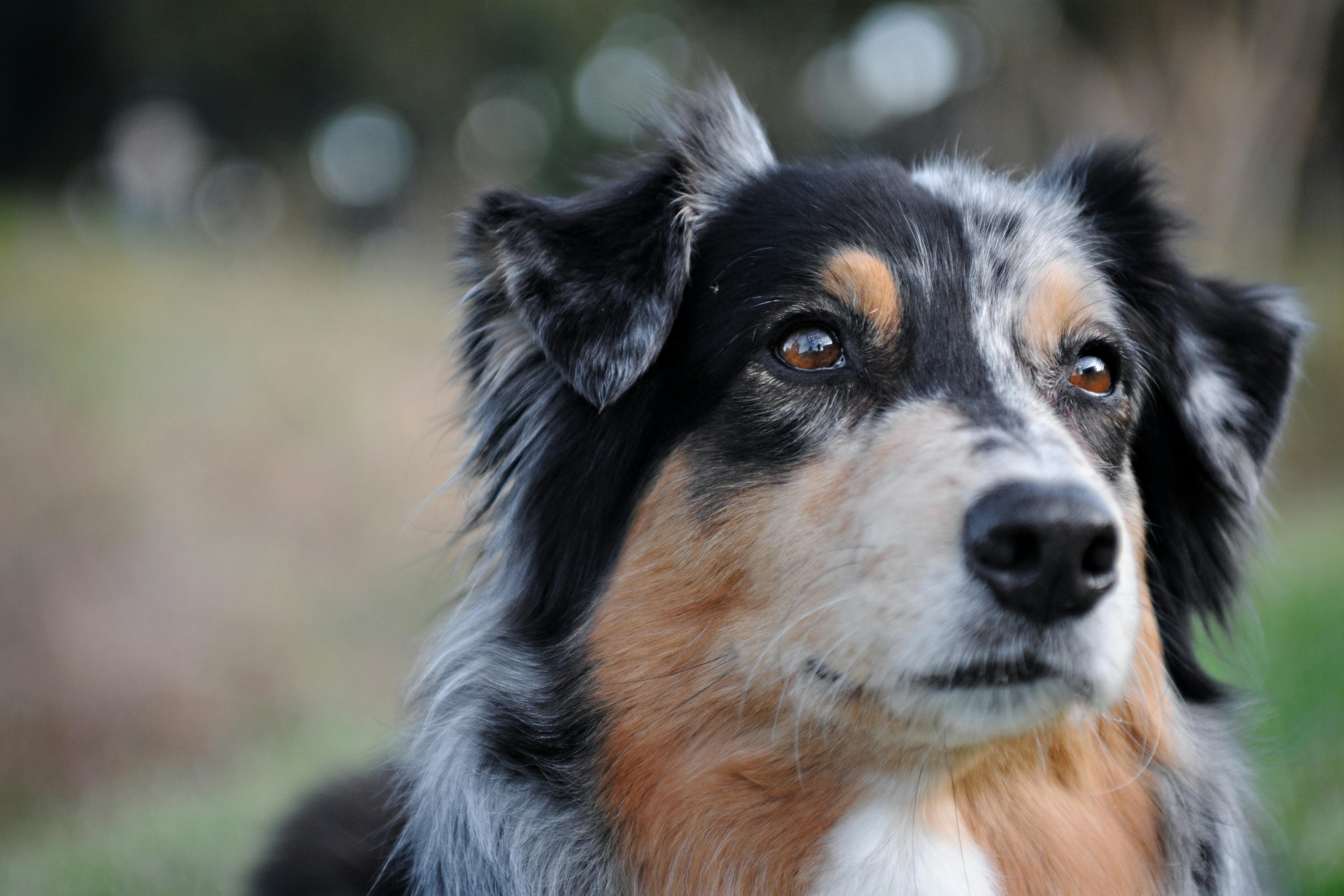
Australian Shepherd Weight Calculator | Is Your Aussie a Healthy Weight? | The Pet Calculator
Check your Australian Shepherd\

Last updated: July 19, 2026

Enter your Beagle's sex, age, and current weight to check if they are within the healthy weight range for their stage of life.
Beagles are a medium-sized hound breed known for their friendly temperament, keen sense of smell, and big appetites. Adult males weigh 22–25 lbs and females 20–23 lbs per AKC standards (for the 13-inch variety; 15-inch Beagles can reach 30 lbs). Beagles are one of the breeds most prone to obesity — studies consistently rank them among the top 5 breeds for overweight prevalence. Their food drive is relentless and they will eat far beyond satiation if given the opportunity. Weight management is critical for joint health, lifespan, and overall quality of life.
The AKC recognises two Beagle varieties based on height at the shoulder — not weight. The 13-inch variety stands under 13 inches and typically weighs under 20 lbs. The 15-inch variety stands between 13 and 15 inches and weighs 20–30 lbs. Most pet Beagles are the 15-inch variety.
Males are typically 1–3 lbs heavier than females at the same height. A healthy adult male 15-inch Beagle averages about 25 lbs, while a female averages about 22 lbs. Weight varies with frame size, muscle mass, and whether the dog comes from show lines (typically stockier) or field/hunting lines (typically leaner).
Beagles are compact, muscular hounds — they should look athletic and lean, not round. Despite their relatively small size, Beagles are surprisingly dense and heavy for their frame. A Beagle that exceeds 30 lbs is almost certainly overweight unless they are exceptionally tall or have mixed-breed heritage.
Beagles grow rapidly in their first 6 months, gaining approximately 2–3 lbs per month. By 6 months, most Beagles have reached 60–70% of their adult weight. Growth slows considerably after 8 months, and most Beagles reach their full adult weight between 12 and 15 months. A Beagle that is still gaining weight after 18 months is almost certainly adding fat, not growing.
Males are consistently heavier than females at every age, with the gap widening as they approach adulthood. The chart below shows weight ranges for the 15-inch Beagle variety — 13-inch Beagles will track the lower end of the female range or slightly below.
Beagles reach their full height by 8–12 months but continue filling out with muscle until approximately 12–15 months. The fastest growth phase occurs between 3 and 6 months, when puppies may gain 2–3 lbs per month.
By 6 months, a Beagle has reached about 60–70% of their adult weight. Growth slows significantly after 8 months. If your Beagle is still gaining weight steadily after 15–18 months, it is almost certainly fat gain rather than growth — consult your vet about a feeding plan adjustment.
The growth timeline is similar for both 13-inch and 15-inch varieties, though 15-inch Beagles may take slightly longer to reach their full adult weight due to their larger frame.
Beagles are one of the most obesity-prone breeds — studies consistently rank them in the top 5 breeds for overweight prevalence. Their relentless food drive means many Beagle owners unknowingly overfeed, normalising a body shape that is actually overweight. A healthy Beagle should look lean and athletic, not round and barrel-shaped.
The difference between a healthy Beagle and an overweight Beagle is stark when you know what to look for. Use the comparison below and the rib test: place your hands on your Beagle's ribcage and press gently — you should feel each rib individually without pressing hard. If you cannot feel the ribs, or if your Beagle's belly hangs down instead of tucking up, they are carrying excess weight.
Even 2–3 extra pounds on a Beagle is proportionally significant — equivalent to roughly 15–20 lbs on a human. That small-sounding number can meaningfully increase the risk of joint problems, diabetes, and reduced lifespan.
A healthy-weight Beagle — note the lean, athletic build with a visible waist behind the ribs.
Body condition scoring (BCS) is the same method vets use to assess a dog's weight. It does not require a scale — it uses what you can see and feel. Use the guide below alongside the rib test and waist check for the most accurate self-assessment of your Beagle's body condition.
For a full body condition assessment, use our Dog BMI Calculator or ask your vet to score your Beagle on the 1–9 Purina Body Condition Scale.
If your Beagle acts like they have never been fed, you are not imagining it. Beagles are among the most food-motivated breeds in existence. This is not a behaviour problem — it is hard-wired biology. Beagles were bred as pack hunting hounds, designed to track prey for hours using their extraordinary sense of smell. A strong food drive was a survival advantage for the breed.
Research suggests that Beagles may have a reduced sensitivity to leptin, the hormone that signals fullness after a meal. This means your Beagle may genuinely still feel hungry even after eating an adequate portion. Combined with their incredible nose — Beagles have approximately 220 million scent receptors compared to a human's 5 million — every food smell triggers an intense drive to eat.
This is why free-feeding is disastrous for Beagles. They will eat far beyond their caloric needs if given access. Always use measured portions, feed on a schedule (2 meals per day for adults), and never leave food out. Use puzzle feeders and slow-feed bowls to extend mealtime and help your Beagle feel more satisfied.
Feeding is the single most important weight management tool for Beagles. Because they cannot self-regulate, every calorie must be measured. The table below shows daily calorie needs by life stage — adjust based on your Beagle's activity level and body condition.
Beagle puppies (8 weeks to 6 months) should be fed 3–4 meals per day with a high-quality puppy food. From 6–12 months, reduce to 2–3 meals per day. Adults should eat exactly 2 measured meals per day — no free-feeding, no unlimited treats.
Use our Dog Nutrition Calculator for a precise calorie target based on your Beagle's exact weight and activity level.
Beagles are generally a healthy breed with a longer-than-average lifespan. However, excess weight dramatically increases the risk of several breed-specific health issues. The three weight-related conditions Beagle owners should watch for are hip dysplasia, hypothyroidism, and obesity-related joint disease.
Hip dysplasia affects approximately 18% of Beagles evaluated by the OFA (Orthopedic Foundation for Animals). While less common than in large breeds, it is still a significant concern — and every extra pound puts additional stress on the hip joints. Keeping your Beagle lean can prevent or delay the onset of symptoms.
Hypothyroidism is particularly common in Beagles. An underactive thyroid slows metabolism, causing weight gain even on a normal diet. If your Beagle is gaining weight despite proper feeding and exercise, or seems unusually tired, ask your vet to check thyroid levels. Hypothyroidism is easily managed with daily medication.
Intervertebral disc disease (IVDD) can also affect Beagles, particularly those who are overweight. Excess weight compresses the spine and increases the risk of disc herniation. While not as common as in Dachshunds, IVDD is a recognised concern in overweight Beagles.
Beagles have an average lifespan of 12–15 years, which is above average for their size class. Well-cared-for Beagles regularly live to 13–14 years, and some reach 15+. However, overweight Beagles live significantly shorter lives.
A landmark Purina study following dogs over their entire lifespan found that lean-fed dogs lived a median of 1.8 years longer than their overfed siblings — identical genetics, same breed, only difference was body condition. Applied to Beagles, this means an overweight Beagle might live 10–12 years instead of 12–15.
Obesity is the single most controllable factor affecting your Beagle's lifespan. Every pound of excess weight takes days off their life. Keeping your Beagle at a healthy BCS of 4–5 throughout their life is the most impactful decision you can make for their longevity.
Adult Beagles need 60–90 minutes of exercise per day, split into at least two walks plus active playtime. Beagles were bred as pack hunting hounds with excellent stamina — they need significantly more exercise than their medium size might suggest.
Under-exercised Beagles become bored, destructive, and gain weight rapidly. A Beagle's exercise needs do not decrease dramatically with age — even senior Beagles benefit from 30–45 minutes of daily activity. Puppies under 12 months should get 5 minutes of structured exercise per month of age, twice daily, supplemented with free play.
Important safety note: Always keep Beagles on a lead or in a securely fenced area. Their extraordinary sense of smell means they will follow a scent trail with complete disregard for recall commands. A Beagle that picks up a scent can run for miles. Use our Dog Exercise Calculator for a personalised recommendation.
If your Beagle is overweight, a structured weight loss plan can add years to their life. The goal is gradual, steady weight loss — 1–2% of body weight per week. For a 30 lb Beagle that needs to reach 25 lbs, this means losing about 0.3–0.5 lbs per week over 10–16 weeks.
Step 1: Rule out hypothyroidism. Before starting any diet, ask your vet to check thyroid levels. Hypothyroidism is common in Beagles and causes weight gain that diet alone cannot fix — it requires medication.
Step 2: Calculate target calories. Reduce daily calories by 15–20% from maintenance. For a 25 lb target weight, this means approximately 570–780 kcal/day. Use our Dog Weight Loss Calculator for a precise target.
Step 3: Eliminate extras. Table scraps, training treats, and dental chews all count. Switch to low-calorie treats (baby carrots, green beans, apple slices) and deduct treat calories from the daily food allowance. A single Milk-Bone contains about 40 kcal — that is 5% of a Beagle's daily budget.
Step 4: Increase exercise gradually. Add 10 minutes per week to walks until you reach 60–90 minutes daily. Combine with puzzle feeders and scent games that provide mental stimulation without extra calories.
Hypothyroidism is common in Beagles and causes unexplained weight gain. A simple blood test can diagnose it. Early treatment prevents further weight-related complications.
Pocket Beagles are smaller-than-standard Beagles selectively bred for compact size. They typically stand under 13 inches and weigh 7–15 lbs as adults. Pocket Beagles are not a separate AKC variety — the term describes Beagles at the bottom of the size range or bred from consistently small parents. They share the same food drive and obesity risk as larger Beagles.
Puggles (Pug × Beagle mix) typically weigh 15–30 lbs as adults. Puggles that take after the Beagle parent are taller and leaner; those with more Pug influence are stockier and may have brachycephalic breathing issues. Both parent breeds are extremely food-motivated, making Puggles particularly prone to obesity. For Puggle weight assessment, use our general Dog Weight Calculator.
Get a precise daily calorie target for your Beagle based on weight, age, and activity level.
Create a safe weight loss plan for your overweight Beagle with weekly targets.
Calculate exact portion sizes for your Beagle's food brand and calorie needs.
Get a personalised exercise plan to keep your Beagle fit and prevent weight gain.
Assess your Beagle's body condition score and body mass index.
General dog weight calculator for mixed breeds and other breeds.
Check your Australian Shepherd\

Free Beagle weight calculator — check your Beagle\
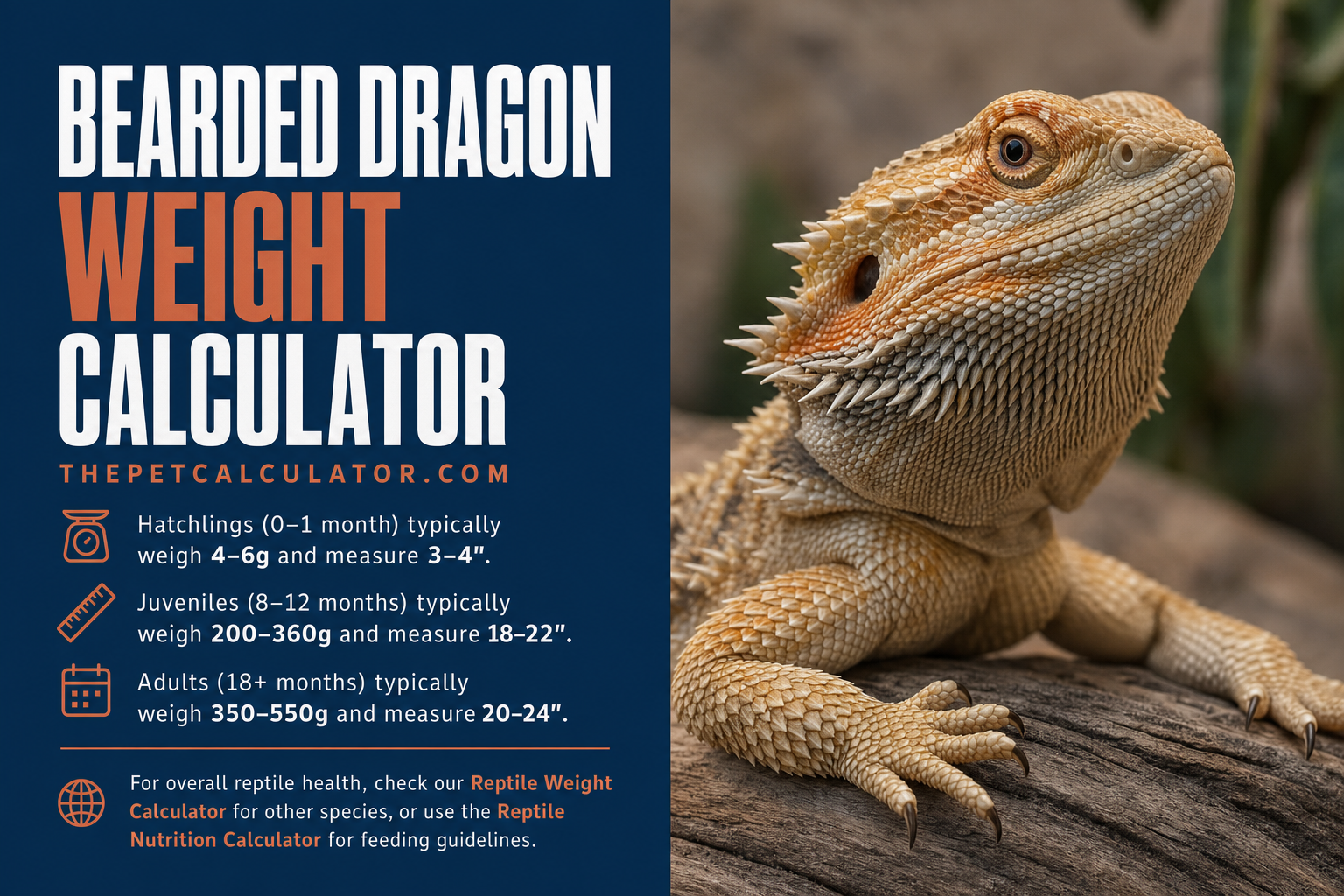
Free bearded dragon weight calculator. Check if your bearded dragon is a healthy weight for their age. Includes weight-by-age chart from hatchling to adult, growth milestones, and care tips.

Free dog calorie calculator by breed. Find out exactly how many calories your dog needs per day by weight, breed, age, and activity level. Get instant kcal and feeding portions for Labradors, German Shepherds, Chihuahuas, and every breed in between. Try it now.

Free puppy calorie calculator and nutrition tool. Calculate your puppy\

Free senior dog calorie calculator. Calculate your older dog\
FAQs
Adult Beagles typically weigh 20–30 lbs depending on variety. The AKC recognises two Beagle varieties: 13-inch (under 20 lbs) and 15-inch (20–30 lbs). Males tend to be 1–3 lbs heavier than females. A healthy adult 13-inch Beagle weighs 15–20 lbs, while a 15-inch Beagle weighs 20–30 lbs.
Feel the ribcage with flat fingers — you should be able to feel each rib easily without pressing hard. From above, a clear waist should be visible behind the ribs. From the side, the belly should tuck up noticeably. Beagles carry excess weight around their midsection first — if your Beagle looks barrel-shaped with no waist definition, they are likely overweight. Even 2–3 extra pounds on a Beagle is proportionally significant.
A male Beagle at 6 months typically weighs 12–18 lbs, while a female weighs 11–16 lbs. At this age they have reached approximately 60–70% of their adult weight. If your Beagle puppy weighs significantly more or less than this range, consult your vet to check for overfeeding or underlying health issues.
Beagles typically reach full height by 8–12 months but continue to fill out and add muscle mass until 12–15 months. A Beagle that continues gaining weight after 15 months is likely adding fat, not growing. Beagles grow rapidly in the first 6 months, gaining roughly 2–3 lbs per month, then slow down significantly.
Beagles were bred as scent hounds to track prey for hours — their brains are wired to seek food relentlessly. They are one of the most food-motivated breeds, and studies suggest Beagles may have a reduced sensitivity to the hormone leptin, which signals fullness. This means your Beagle genuinely feels hungry even after eating a full meal. Never rely on a Beagle to self-regulate food intake — always use measured portions.
The average adult Beagle weighs 20–25 lbs, though this varies by variety. A 13-inch Beagle averages 15–20 lbs, while a 15-inch Beagle averages 20–30 lbs. Males average about 25 lbs and females about 22 lbs. The average weight also depends on whether the Beagle is a show dog (typically heavier) or a field-bred Beagle (typically leaner).
Beagles have a lifespan of 12–15 years, which is above average for their size. However, overweight Beagles live significantly shorter lives — studies show obesity can reduce a dog's lifespan by up to 2.5 years. A landmark Purina study found that lean-fed dogs lived a median of 1.8 years longer than their overfed siblings. Keeping your Beagle at a healthy weight is one of the most effective ways to maximise their lifespan.
A "Pocket Beagle" is a smaller-than-standard Beagle, typically standing under 13 inches and weighing 7–15 lbs as an adult. Pocket Beagles are not a separate AKC-recognised variety — the term refers to Beagles bred selectively for smaller size. They share the same food drive and obesity risk as standard Beagles, so weight management is equally important. If your Pocket Beagle exceeds 15 lbs, consult your vet.
The AKC recognises two Beagle varieties based on height at the shoulder. A 13-inch Beagle stands under 13 inches and typically weighs under 20 lbs. A 15-inch Beagle stands between 13 and 15 inches and weighs 20–30 lbs. The variety designation is based on height, not weight — but height and weight are strongly correlated in Beagles. Most pet Beagles fall into the 15-inch variety.
An average adult Beagle needs 674–922 calories per day depending on size, age, and activity level. Beagles should never be free-fed — use measured portions split into 2 meals per day. A typical 25 lb adult Beagle needs about 1–1.5 cups of quality dry food per day. Use our Dog Nutrition Calculator for a precise calorie target based on your Beagle's specific weight and activity level.
Yes, Beagles can develop hip dysplasia, though less commonly than large breeds like German Shepherds or Labradors. The OFA reports that approximately 18% of Beagles evaluated show some degree of hip dysplasia. Excess body weight significantly increases the risk and severity of hip problems in Beagles. Keeping your Beagle lean reduces joint stress and can prevent or delay the onset of hip dysplasia symptoms.
Adult Beagles need 60–90 minutes of exercise per day, split into at least two walks plus playtime. Beagles were bred as pack hunting dogs with excellent stamina — they need more exercise than their size might suggest. Under-exercised Beagles become bored, destructive, and gain weight rapidly. Always keep Beagles on a lead or in a fenced area — their nose will lead them to follow a scent and ignore recall commands.
Start by calculating your Beagle's ideal calorie intake using our Dog Weight Loss Calculator. Reduce daily calories by 15–20% from maintenance, switch to a high-protein/low-fat food, eliminate table scraps and high-calorie treats, and increase exercise gradually. Aim for a weight loss of 1–2% of body weight per week. Always consult your vet before starting a weight loss programme — they can rule out hypothyroidism, which is common in Beagles and causes weight gain.
A "large Beagle" typically refers to a 15-inch variety Beagle at the upper end of the weight range (25–30 lbs). Some Beagles exceed the breed standard due to genetics, mixed breeding, or being overweight. If your Beagle weighs over 30 lbs, they are likely either overweight or may have mixed-breed heritage. True purebred Beagles should not exceed 30 lbs — if yours does, a vet check is recommended to assess body condition.
Adult Beagles weigh 9–13.6 kg (20–30 lbs) for the 15-inch variety and 7–9 kg (15–20 lbs) for the 13-inch variety. Males average about 11.3 kg (25 lbs) and females about 10 kg (22 lbs). To convert lbs to kg, multiply by 0.4536. To convert kg to lbs, multiply by 2.2046.
A male Beagle at 3 months typically weighs 7–10 lbs, while a female weighs 6–9 lbs. At this age, puppies should be gaining about 2 lbs per month. If your Beagle puppy weighs significantly more, ensure you are not overfeeding — a chubby puppy is not a healthy puppy, especially in a breed this prone to obesity.
Yes, Beagles are one of the breeds most commonly affected by hypothyroidism — an underactive thyroid gland that slows metabolism and causes weight gain, lethargy, and skin problems. If your Beagle gains weight despite proper feeding and exercise, or seems unusually sluggish, ask your vet to check thyroid levels. Hypothyroidism is easily managed with daily medication once diagnosed.
A Puggle (Pug × Beagle mix) typically weighs 15–30 lbs as an adult, depending on which parent they take after more. Puggles that inherit more Beagle traits tend to be leaner and taller; those with more Pug influence are stockier and shorter. Like both parent breeds, Puggles are highly food-motivated and prone to obesity. For mixed breeds, use our general Dog Weight Calculator as a starting point.
Beagle mixes typically live 10–15 years depending on the other breed in the mix. Beagle-Lab mixes (Beagadors) average 10–12 years. Beagle-Pug mixes (Puggles) average 10–15 years. Beagle-Jack Russell mixes (Jackabees) average 12–16 years. In all cases, maintaining a healthy weight is the single most impactful factor for maximising lifespan in Beagle mixes.
"Big-boned" is rarely a valid explanation for an overweight Beagle. Beagles are a compact, muscular breed — they should be lean and athletic, not round. The rib test is definitive: if you cannot feel individual ribs with light pressure, your Beagle is carrying excess fat regardless of their frame size. Even 15-inch Beagles at the top of the weight range (30 lbs) should have a clearly visible waist and belly tuck.
Newborn Beagle puppies weigh 5–10 oz (140–280 g) at birth, depending on litter size. Puppies from larger litters tend to be smaller. They should roughly double their birth weight in the first 1–2 weeks. By 8 weeks, a Beagle puppy typically weighs 3.0–6.0 lbs. Steady weight gain in the first weeks is the best indicator of a healthy newborn.
Yes — a harness is strongly recommended for Beagles. Beagles are notorious pullers, especially when they pick up a scent. A collar puts pressure on the throat and can cause tracheal damage or neck injuries. A well-fitted harness distributes force across the chest and shoulders. A no-pull harness with a front clip is particularly effective for Beagles that lunge toward scents during walks.