Bearded Dragon Weight by Age Chart
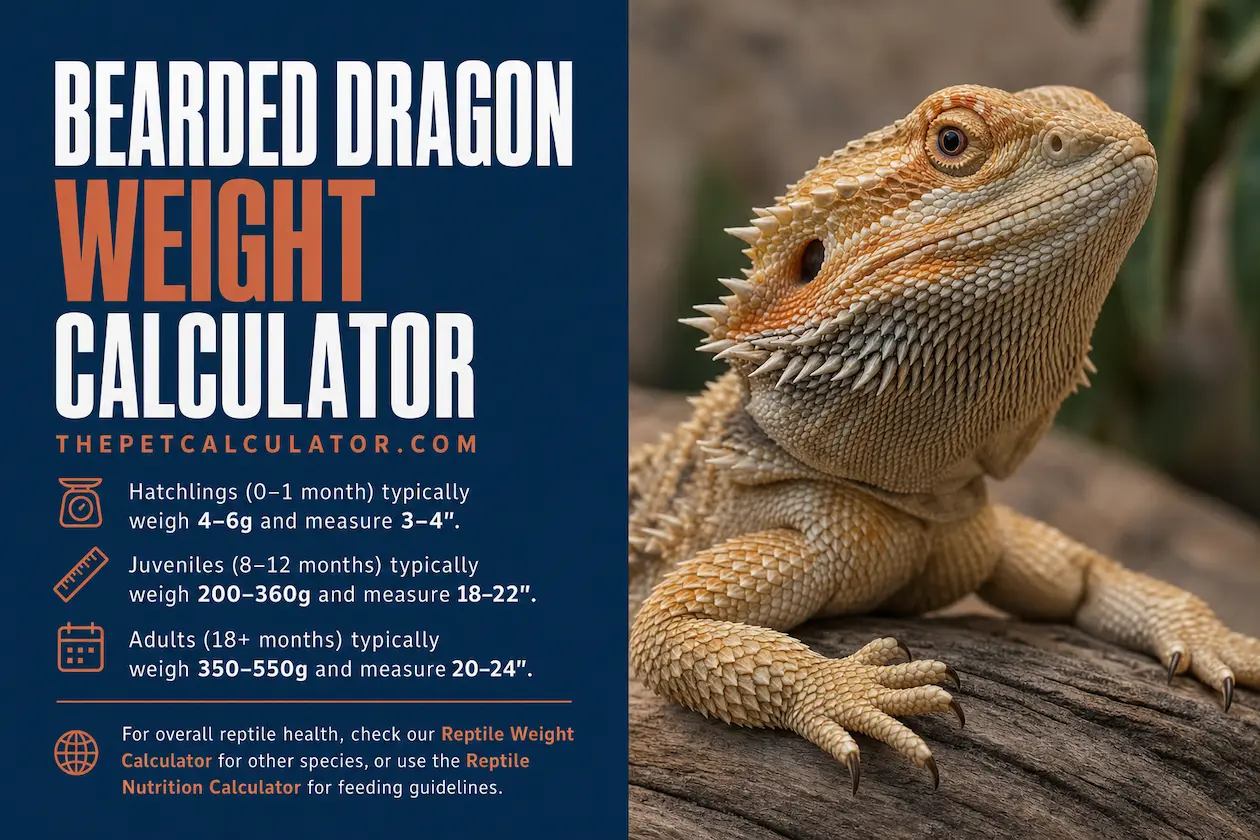
Bearded dragons grow quickly in their first year, then slow down as they approach adult size. This chart shows typical weight ranges at each growth stage. Individual dragons vary — genetics, diet, and husbandry all affect growth rate.
| Age | Weight (grams) | Weight (oz) | Length (inches) |
|---|
| 0–1 month (hatchling) | 4–6g | 0.1–0.2 oz | 3–4" |
| 1–2 months | 6–40g | 0.2–1.4 oz | 5–9" |
| 2–3 months | 20–100g | 0.7–3.5 oz | 8–11" |
| 3–4 months | 50–115g | 1.8–4.1 oz | 9–12" |
| 4–5 months | 60–150g | 2.1–5.3 oz | 11–16" |
| 5–6 months | 100–200g | 3.5–7.1 oz | 13–18" |
| 6–8 months | 150–280g | 5.3–9.9 oz | 16–20" |
| 8–12 months (juvenile) | 200–360g | 7.1–12.7 oz | 18–22" |
| 12–18 months (sub-adult) | 300–450g | 10.6–15.9 oz | 20–24" |
| 18+ months (adult) | 350–550g | 12.3–19.4 oz | 20–24" |
Bearded Dragon Husbandry for Healthy Weight
Proper husbandry is the foundation of healthy growth. Temperature, UVB lighting, and diet all directly affect your bearded dragon's weight and development.
Temperature
- Basking: 100–110°F
- Cool side: 80–85°F
- Night: 65–75°F (no heat lamp)
- Wrong temps = poor digestion = poor growth
UVB Lighting
- Type: T5 HO 10.0 UVB tube
- Duration: 10–12 hours/day
- Replace: Every 6–12 months
- No UVB = can't metabolize calcium = MBD
Diet by Age
- Juveniles: 70% insects, 30% greens
- Adults: 20–30% insects, 70–80% greens
- Calcium: Dust insects daily (juveniles)
- Staples: dubias, BSFL, collard greens, squash
For overall reptile health, check our Reptile Weight Calculator for other species, or use the Reptile Nutrition Calculator for feeding guidelines.
Understanding Bearded Dragon Growth Stages
Bearded dragons pass through four broad life stages, and each one has a different weight profile and different care priorities. Knowing which stage your dragon is in helps you judge whether their weight is on track or a sign that something needs adjusting.
Hatchling (0–2 months)
Starting around 4–6 grams, hatchlings are fragile and eat almost constantly. They need small, appropriately sized insects several times a day and daily calcium dusting. Slow weight gain at this stage often points to temperature or feeding problems.
Juvenile (2–12 months)
This is the fastest growth window. A healthy juvenile can gain 50–100 grams per month between 3 and 8 months, driven by an insect-heavy diet. Weekly weigh-ins are most useful here for catching plateaus early.
Sub-adult (12–18 months)
Growth slows noticeably as your dragon approaches full length. The diet should be shifting toward more greens and fewer insects to prevent excess fat gain while the frame finishes filling out.
Adult (18+ months)
Weight stabilizes in the 350–550 gram range. The goal is maintenance: steady weight, a plant-forward diet, and monitoring for slow creep upward (obesity) or unexpected drops (illness).
Signs of a Healthy Weight vs an Unhealthy One
The number on the scale is only part of the picture. Body condition — how your dragon looks and feels — tells you whether that weight is muscle and healthy fat or a warning sign. Check these visual cues alongside the calculator result.
Healthy
- Rounded belly that sits flat, not bulging
- Tail base is full but you can feel the spine
- Hips and ribs are not visible but not buried in fat
- Alert, active, and basking normally
Underweight
- Visible ribs, hip bones, and spine ridges
- Sunken or wrinkled skin along the sides
- Thin tail base with a bony feel
- Lethargy or reduced appetite
Overweight
- Belly that bulges outward past the legs
- Fat pads on the head or above the eyes
- Rolls of fat at the leg joints
- Reluctance to move or climb
Worked Examples: Reading Your Result
Here are three common scenarios that show how to interpret the calculator against the age chart above. Use them as a guide for what action, if any, your own reading calls for.
Example 1: 5-month-old at 90g
The 4–5 month range is 60–150g, so 90g is comfortably in range. This dragon is growing normally. Keep the insect-heavy juvenile diet and weigh weekly to confirm continued gains.
Example 2: 8-month-old at 140g
The 6–8 month range is 150–280g, so 140g is slightly under. This is worth investigating: check basking temperature (100–110°F), UVB age, and whether the dragon is eating enough insects. A vet visit rules out parasites if it fails to catch up.
Example 3: Adult male at 600g
Adult range tops out around 550g, so 600g suggests overweight, especially if paired with fat pads and a bulging belly. Cut fatty feeders like waxworms, raise the greens ratio to 70–80%, and add out-of-enclosure exercise.
Male vs Female Bearded Dragon Weight
Sex has a measurable effect on adult size. Males are generally heavier and longer, so a female sitting at the lower end of the adult range is not necessarily underweight. Use these averages to set realistic expectations for your dragon.
| Trait | Male | Female |
|---|
| Adult weight | 400–550g | 350–500g |
| Adult length | 20–24" | 18–22" |
| Head shape | Wider, more triangular | Narrower |
| Femoral pores | Larger, more prominent | Smaller |
| Gravid weight swing | None | Can gain 30–70g when carrying eggs |
A note on egg-laying: females can put on significant weight when gravid (carrying eggs), even without mating, then drop it after laying. A sudden gain in a mature female followed by digging behavior is usually eggs, not obesity.
Common Causes of Weight Loss or Gain
When a weigh-in falls outside the expected range, the cause usually traces back to husbandry, diet, or health. Work through these common factors before assuming genetics.
Causes of weight loss
- Basking temperature too low to digest food
- Expired or weak UVB reducing appetite
- Internal parasites (common in new or wild-caught dragons)
- Impaction from loose substrate or oversized prey
- Brumation, a natural winter slowdown in appetite
- Stress from a new enclosure or tank mate
Causes of weight gain
- Too many fatty feeders (waxworms, butterworms, superworms)
- Feeding an adult like a juvenile (too many insects)
- Not enough greens in the adult diet
- Limited space or too little time outside the enclosure
- Overfeeding by free-feeding rather than measured meals
- Gravid females carrying eggs (temporary)
If husbandry and diet look correct and weight still trends the wrong way over two or three weigh-ins, book a reptile veterinarian. Rapid or unexplained weight loss in particular should never be ignored.
Tips for Weighing Your Bearded Dragon Accurately
Consistency matters more than any single reading. Small day-to-day swings from food, water, or a recent bowel movement are normal, so the trend across weeks is what you track. These habits keep your numbers reliable.
- Use a gram scale. A digital kitchen scale that reads to 1 gram is ideal. Ounces are too coarse for small juveniles.
- Weigh at the same time of day. First thing in the morning, before feeding, gives the most comparable readings.
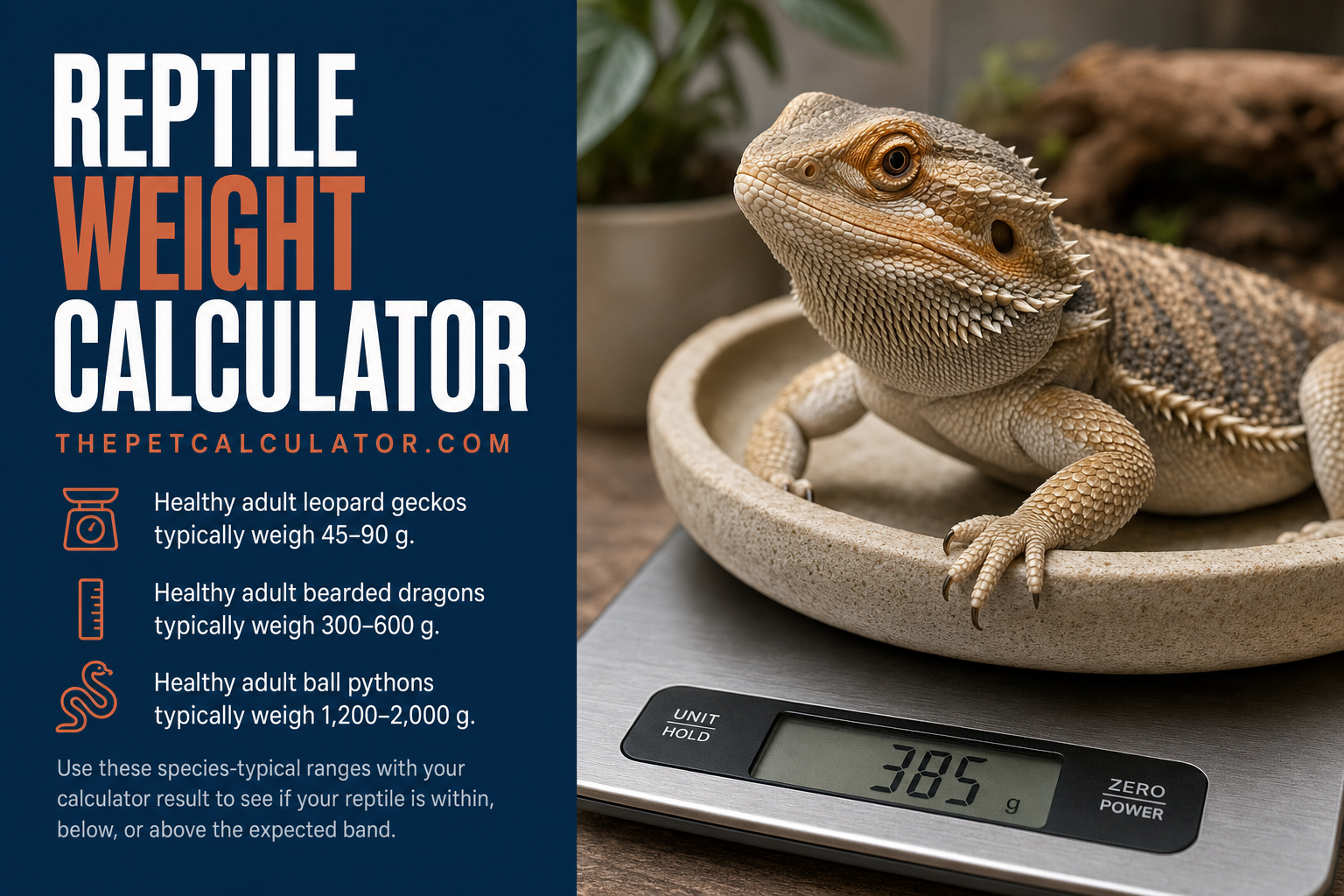
- Tare a container. Place a bowl or small tub on the scale, zero it, then add your dragon so an active reptile can't walk off the platform.
- Log every reading. A simple notes app or chart makes plateaus and drops obvious that you would miss otherwise.
- Weigh more often when young. Weekly for under-12-month juveniles, every two to four weeks for adults.
- Don't panic over small swings. A 5–15 gram difference between two adult readings is normal; look at the multi-week direction.