Cat quality of life calculator

How To Use


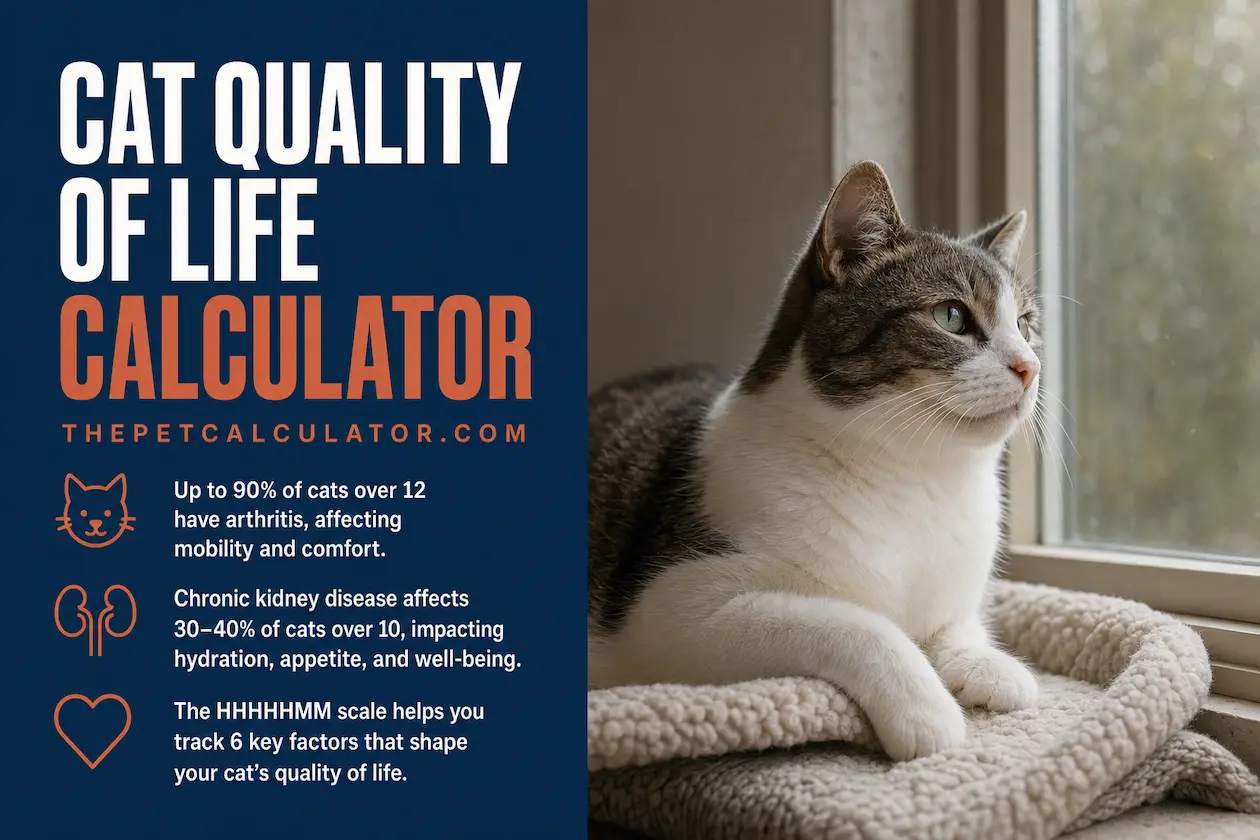
The HHHHHMM Quality of Life Scale (developed by Dr. Alice Villalobos) adapted for cats. Rate each factor from 1 (severe problems) to 10 (no problems). This tool is especially useful for senior cats, cats with chronic illness, or when facing difficult care decisions. Cats are masters at hiding pain — be observant and honest in your ratings. Always discuss results with your veterinarian.

Quick Steps

  • 1 Rate each of the 7 HHHHHMM factors from 1 (severe problems) to 10 (no problems).
  • 2 Be honest about your cat's current condition — cats hide pain well.
  • 3 Click Calculate to see the total score and assessment.

Cat Quality of Life Calculator


Fill Out The Fields Below


5
5
5
5
5
5
5

Signs of Pain & Declining Quality of Life in Cats

Cats instinctively hide pain and illness — a survival behavior inherited from their wild ancestors. By the time a cat shows obvious signs, they may have been suffering for weeks. Learning subtle signs helps you catch issues earlier and score the HHHHHMM scale more accurately.

Physical Signs

  • Hiding more than usual — seeking isolation is a primary pain indicator
  • Hunched posture — tense, tucked-up body while resting
  • Squinted eyes — the "Feline Grimace Scale" measures facial tension
  • Changes in grooming — either stopped grooming (matted fur) or over-grooming one area
  • Appetite changes — eating less, approaching food but not eating, or drooling
  • Litter box changes — accidents outside the box, straining, or changes in output

Behavioral Signs

  • Withdrawal — no longer seeking attention or interaction
  • Aggression when touched — especially in areas that didn't bother them before
  • Reluctance to jump — avoiding favorite high spots, using stairs slowly
  • Sleep pattern changes — sleeping much more or restless/unable to settle
  • Vocalization changes — yowling at night, growling, or unusually quiet
  • Loss of interest — no longer playing, watching birds, or responding to treats

Understanding the HHHHHMM Scale for Cats

The HHHHHMM scale provides a structured way to assess your cat's quality of life. Here's how to score each factor specifically for cats:

FactorScore 8–10 (Good)Score 4–7 (Fair)Score 1–3 (Poor)
HurtNo pain, relaxed posture, purrsSome discomfort, managed with medsUnmanaged pain, hiding, grimacing
HungerGood appetite, eats normallyEats with encouragement, pickyRefuses food, needs force-feeding
HydrationDrinks well, skin snaps backNeeds sub-Q fluids occasionallySeverely dehydrated, needs daily fluids
HygieneGrooms self, uses litter boxOccasional accidents, less groomingSoiled, matted, can't use litter box
HappinessPurrs, seeks attention, playsLess interactive, some interestWithdrawn, no interest, depressed
MobilityWalks, jumps to favorite spotsSlower, avoids some jumpsCan barely walk, can't reach food/water
More Good DaysMostly good daysMixed, some bad daysBad days outnumber good

We also have a Dog Quality of Life Calculator using the same HHHHHMM scale. For cat weight monitoring, try our Cat Weight Calculator or Cat BMI Calculator.

FAQs

Frequently Asked Questions

What is the HHHHHMM quality of life scale for cats?

The HHHHHMM scale (developed by Dr. Alice Villalobos) assesses seven factors: Hurt, Hunger, Hydration, Hygiene, Happiness, Mobility, and More good days than bad. Each is scored 1–10. A total of 35 or below may indicate poor quality of life; 50+ suggests reasonable quality. This scale works for both dogs and cats — always discuss results with your veterinarian.

When should I use a cat quality of life calculator?

Use this calculator for senior cats (11+ years), cats with chronic illness (kidney disease, hyperthyroidism, cancer, diabetes), or when facing difficult care decisions. It helps you objectively assess well-being and identify specific areas needing attention.

How do I know if my cat is in pain?

Cats are masters at hiding pain. Signs include: hiding more than usual, decreased grooming or over-grooming one area, loss of appetite, reluctance to jump, hunched posture, dilated pupils, aggression when touched, and changes in litter box habits. The Feline Grimace Scale is another validated tool for assessing pain in cats.

What does a low quality of life score mean for my cat?

A score of 35 or below suggests significant quality of life concerns. This doesn't necessarily mean end-of-life decisions are needed immediately — it means you should discuss pain management, palliative care, and treatment options with your vet. Some factors (like pain) can often be improved with medication.

How often should I assess my cat's quality of life?

For cats with chronic illness or senior cats, assess every 1–2 weeks. Keep a journal of scores over time — trends matter more than any single score. A declining trend over several weeks is more concerning than one bad day.

Is this the same quality of life scale used for dogs?

Yes. The HHHHHMM scale was originally developed for dogs but is widely used for cats as well. The factors (Hurt, Hunger, Hydration, Hygiene, Happiness, Mobility, and More good days than bad) apply equally to cats. We also have a dedicated Dog Quality of Life Calculator.

What are common quality of life concerns in senior cats?

Common issues include: chronic kidney disease (affects 30–40% of cats over 10), hyperthyroidism, arthritis (up to 90% of cats over 12), dental disease, diabetes, and cognitive dysfunction. Regular vet check-ups every 6 months catch these early.

Can quality of life improve after a low score?

Yes, in many cases. Pain medication, appetite stimulants, subcutaneous fluids, environmental modifications (ramps, heated beds, low-entry litter boxes), and treating underlying conditions can significantly improve scores. The goal is to identify which specific factors are low and address them.

Other Calculators for Cats


Other Pet Health Calculators


Ads.txt